NYC night sky in November 2026: 3 meteor showers, a supermoon and the best night for Uranus
The Taurids bring slow, bright fireballs this week and next, the Leonids peak mid-month, a supermoon rises Nov. 24 and Uranus is at its closest on Nov. 25. Here are the dates, the moonlight and where to look from the city.
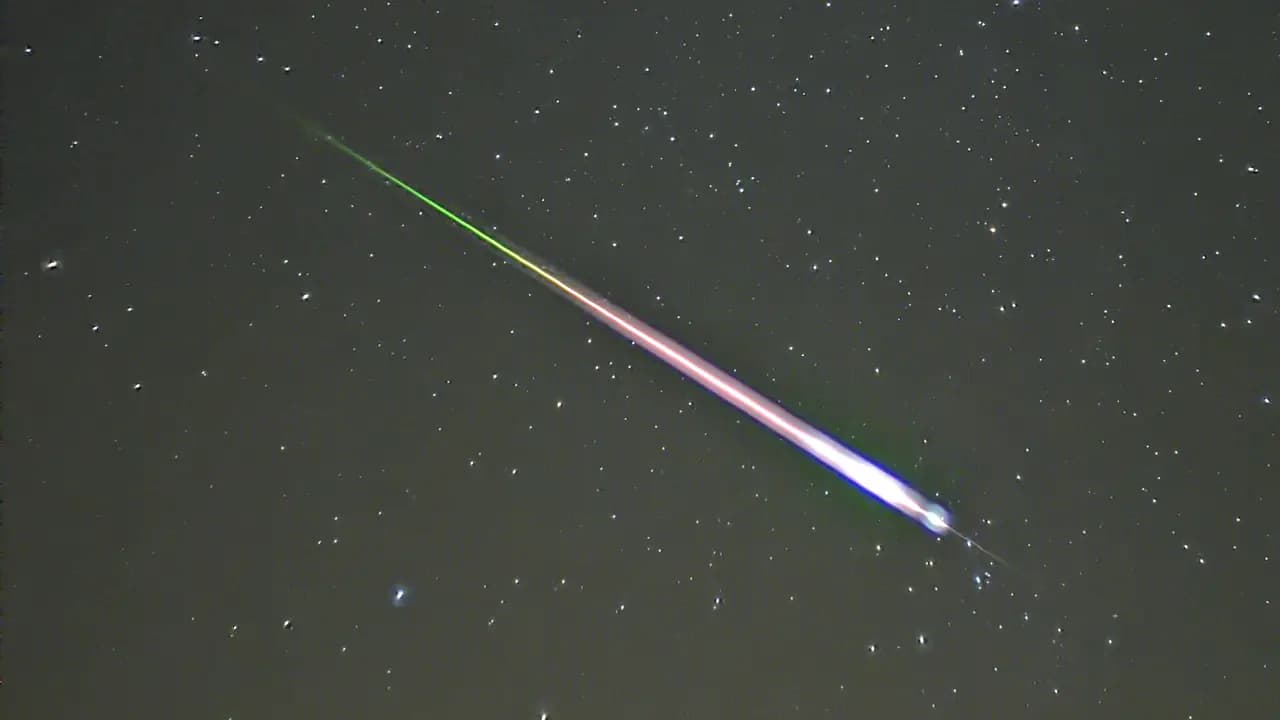
Photo: Navicore / Wikimedia Commons · CC BY 3.0
- Southern Taurids peak the night of Nov. 4–5 with about five meteors an hour, but they are often slow, bright fireballs that can be seen from the city, Gothamist reported; the moon is a 25% crescent (AMS).
- Northern Taurids peak about a week later, the night of Nov. 11–12 per the American Meteor Society (Gothamist lists Nov. 12–13), with almost no moonlight.
- The Leonids peak around Nov. 16–18 at about 15 meteors an hour; look after midnight once the moon sets, from dark spots like Floyd Bennett Field.
- The full moon of Nov. 24 is a supermoon, up to 14% larger and 30% brighter, Gothamist reported; it is full at 9:53 a.m. ET, per the U.S. Naval Observatory.
- Uranus reaches opposition Nov. 25 and shines at magnitude 5.6 near the Pleiades; use binoculars or a small telescope. Jupiter, Mars, Saturn and morning Venus are also up.
With clocks back on standard time as of this morning, evenings get dark early, and November gives New Yorkers something to look at. There are three meteor showers, a supermoon and the year's best chance to spot Uranus, according to Gothamist, the American Meteor Society and EarthSky. Last month's Orionids are covered here.
Meteor showers
- Southern Taurids, night of Wed., Nov. 4, into Thu., Nov. 5: Only about five meteors an hour, but they are exceptionally bright, slow and long-lasting, and the shower often produces fireballs, Gothamist reported. "Even in the city, some of these meteors will be bright enough that you'll be able to see them," Bart Fried of the American Astronomical Society told Gothamist. The AMS says the fireball-rich part of the shower peaks Nov. 5, with a 25% waning crescent moon.
- Northern Taurids, around Nov. 11–13: Similar slow, bright meteors about a week later. The AMS lists the peak as the night of Nov. 11–12, with the moon just 4% lit; Gothamist lists Nov. 12–13. Either way, moonlight is minimal. The new moon is Nov. 9, according to the U.S. Naval Observatory.
- Leonids, around Nov. 16–18: About 15 meteors an hour at the peak, Gothamist reported (the AMS gives the peak night as Nov. 16–17, with a 39% crescent moon). The best viewing is from midnight until dawn, after the moon sets. The AMS does not expect a Leonid storm this year.
Supermoon
The full moon on Tuesday, Nov. 24, is a supermoon. It will look up to 14% larger and 30% brighter than usual because it is near its closest point to Earth, Gothamist reported. The moon is technically full at 9:53 a.m. Eastern, per the Naval Observatory, so the nights of Nov. 23 and 24 are both good. Gothamist said the next supermoon, on Christmas Eve, will be the year's biggest and brightest.
Planets, and the best night for Uranus
- Uranus is at opposition on Wednesday, Nov. 25 (6 p.m. Eastern, per EarthSky). That means Earth sits between it and the sun, so it is closest and brightest for the year. At magnitude 5.6 it is technically visible to the naked eye under truly dark skies, but from New York use binoculars or a small telescope. It sits in Taurus near the Pleiades star cluster and is highest around midnight. "With a 4-inch telescope, you can find Uranus with no problem," Fried told Gothamist. He suggests using a planetarium app to find it first.
- Jupiter is the brightest planet, in the southeast, with Mars close by for most of the month. Saturn is in the south; you need binoculars or a telescope to see its rings. Venus is the morning star for early risers, Gothamist reported.
Tips for watching from the city
- Go somewhere dark with a wide view of the sky. Gothamist suggested places like Floyd Bennett Field in Brooklyn, especially for the Leonids.
- For the Taurids, you don't need to look in any one direction. "There is no right spot," Fried said; bright ones will catch your eye anywhere in your field of view.
- Let your eyes adjust to the dark and keep your phone screen dim. Check the forecast first, because clouds will hide all of it.
- GothamistNovember has 3 meteor showers and the best chance to see Uranus
- American Meteor Society2026/2027 Meteor Shower Calendar
- EarthSkyUranus at opposition on November 25, 2026
- U.S. Naval ObservatoryPhases of the Moon, November 2026 (API)
Every story links to the reporting and records it’s based on. Our editors write each piece from public reporting and official data, and check it against those sources before it’s published.
Comments
0NSynced with CommunityIn CommunityYour comment is also posted to Community with this story attached, so neighbors can find it and reply there too.
No comments yet
Start the conversation — your comment shows up here and in Community for neighbors nearby.