Orionid meteor shower peaks tonight: when to look up from New York City
The yearly shower from Halley's comet peaks overnight Wednesday into Thursday. A bright moon sets around 3:12 a.m., leaving a predawn window under a partly cloudy sky.
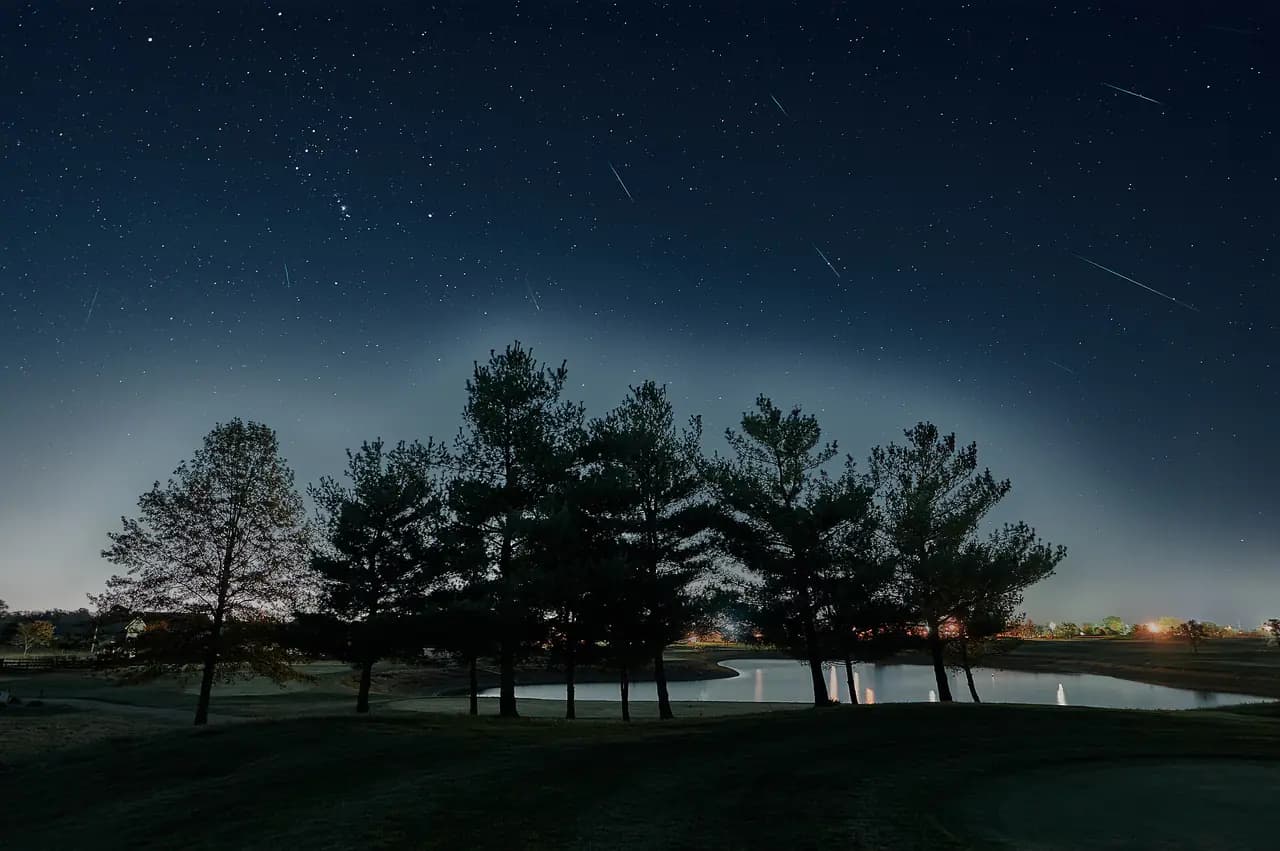
Photo: Jim Vajda / Wikimedia Commons · CC BY 2.0
- The Orionid meteor shower was predicted to peak at 2 p.m. ET Wednesday, so the best viewing is overnight Wednesday into Thursday, after midnight (ABC7, citing EarthSky).
- The moon will be about 74% lit on peak night, the American Meteor Society says, and sets around 3:12 a.m. Thursday in Manhattan, according to the U.S. Naval Observatory.
- In a normal year the Orionids produce 10 to 20 meteors an hour at their peak under dark skies; city lights will cut that sharply.
- The National Weather Service forecasts a partly cloudy night in Central Park with a low around 48 and gusts up to 25 mph; Thursday night looks mostly clear.
- The shower stays active through Nov. 7, so a clear night later this week is still worth a look.
One of fall's best-known meteor showers peaks tonight, and New Yorkers willing to set an alarm have the best shot at seeing it. The Orionids, made of debris from Halley's comet, were predicted to peak at 2 p.m. ET Wednesday, which puts the best viewing in the overnight hours from Wednesday into Thursday, ABC7 reported, citing EarthSky. Meteors should start to appear after midnight.
When to look
- The moon is the main obstacle. It will be about 74% illuminated on peak night, and the American Meteor Society warns of significant interference while it is above the horizon, though brighter meteors can still show up.
- Best window: the moon sets around 3:12 a.m. Thursday in Manhattan, according to U.S. Naval Observatory data, and the sun rises at 7:15 a.m. The darkest stretch for meteor watching falls between moonset and the first light of dawn.
- What to expect: in a normal year the Orionids produce 10 to 20 meteors an hour at their peak, the AMS says, a count that assumes dark skies. From the city, expect only the brightest. Orionid meteors move fast, about 41 miles per second, and some leave glowing trails or break up into bright fireballs, ABC7 said, citing NASA.
The forecast
The National Weather Service forecasts a partly cloudy night in Central Park with a low around 48 degrees and a north wind of 8 to 13 mph, with gusts as high as 25 mph. That means gaps in the clouds rather than a clear sky, and a chilly wait. Thursday night looks better on paper, mostly clear with a low around 45.
Tips for city sky-watchers
Get as far from streetlights as you can, lie back or use a reclining chair so you can take in as much of the sky as possible, ABC7 advised. The meteors seem to come from the direction of the constellation Orion, but they can appear anywhere in the sky, so scan the whole sky rather than one patch.
If tonight doesn't work out, the shower stays active through Nov. 7, according to the AMS, with lower rates after the peak.
- ABC7 New YorkOrionid meteor shower's glowing streaks and fireballs will light up the sky
- American Meteor Society2026/2027 Meteor Shower Calendar
- National Weather ServiceForecast for Central Park, NY
- U.S. Naval ObservatorySun and Moon Data for One Day
Every story links to the reporting and records it’s based on. Our editors write each piece from public reporting and official data, and check it against those sources before it’s published.
Comments
0NSynced with CommunityIn CommunityYour comment is also posted to Community with this story attached, so neighbors can find it and reply there too.
No comments yet
Start the conversation — your comment shows up here and in Community for neighbors nearby.