Formerly homeless outreach workers are getting New Yorkers off the street through a Manhattan DA program
The Neighborhood Navigators, run by the nonprofit The Bridge, hire people who have lived through homelessness. More than 175 people have been housed since 2024, and City Hall added $1.25 million this year.
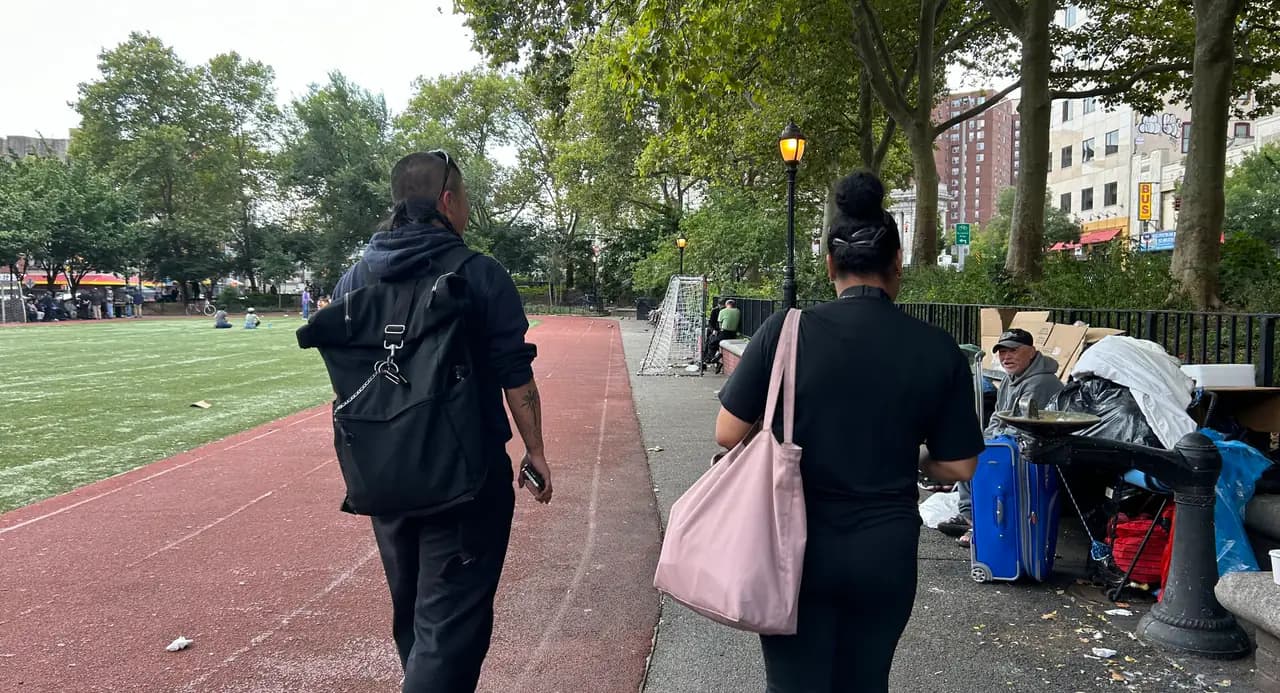
Photo: Samantha Max / Gothamist
- Neighborhood Navigators, started by the Manhattan DA's office and run by the nonprofit The Bridge, sends peer workers with lived experience of homelessness to engage people on the street.
- More than 175 people have been placed in housing since the program began in 2024, Gothamist reports; the Mamdani administration awarded it $1.25 million this year.
- It works in Central and East Harlem, Chinatown and the Lower East Side, Washington Heights and Inwood, and Midtown West, Hell's Kitchen and Chelsea.
- Nearly 5,000 people slept outdoors or in the subway this year, the most in more than a decade, according to Gothamist.
- Navigators can't see the city's outreach database, which only DHS-contracted providers can use, a gap advocates say makes coordination harder.
A Manhattan street outreach program built around workers who have been homeless themselves is getting a closer look as the city works on a new plan to bring people indoors. The Neighborhood Navigators, started by the Manhattan district attorney's office and run by the nonprofit The Bridge, have placed more than 175 people in housing since 2024, Gothamist reported Saturday.
The Mamdani administration awarded the program $1.25 million this year as it develops a citywide strategy on homelessness, according to Gothamist. The need is large: nearly 5,000 people slept in parks, subway stations or on the street this year, the highest count in more than a decade, the outlet reported.
How the program works
District Attorney Alvin Bragg's office announced the initiative in June 2023, awarding nearly $6 million to The Bridge, a peer-founded housing and behavioral health provider, to build a network of navigators for people with entrenched mental health or substance use needs who spend much of their time on Manhattan's streets, according to the DA's announcement. Taking part is voluntary. Gothamist reports the office paid for the program with forfeiture funds.
The idea is that people who have lived through the same things can earn trust faster. In the program's first few months, navigators engaged more than 400 New Yorkers and handed out hygiene kits, food and clothing along with referrals for housing, treatment, education and jobs, the DA's office said.
Workers can spend an entire day with one person, staying with them through a benefits appointment or until they reach a housing placement or an inpatient treatment program, a deputy division chief in the DA's office told Gothamist. In one case the navigators stayed all day at a city benefits office with a 58-year-old Harlem man to get his benefits restored; in another, they moved a 67-year-old in Lower Manhattan into supportive housing in under three weeks.
Where navigators work
- Central and East Harlem
- Chinatown and the Lower East Side
- Washington Heights and Inwood
- Midtown West, Hell's Kitchen and Chelsea
The Garment District Alliance, a business improvement district, has also hired the navigators for outreach in its area, according to Gothamist.
The coordination gap
Advocates say the city's outreach system can be uncoordinated, with groups working in silos. The navigators don't have access to the city's database of contacts between outreach workers and homeless New Yorkers, which is limited to providers contracted by the Department of Homeless Services, Gothamist reported. Instead, they rely on their own neighborhood networks for shelter, treatment and medical care.
Related: our Oct. 15 story on the city's street outreach spending.
- GothamistHow formerly homeless New Yorkers are helping others get off the streets
- Manhattan District Attorney's OfficeIntroducing Our Neighborhood Navigators
- Manhattan District Attorney's OfficeD.A. Bragg Makes Major Mental Health Investment, Awards $6 Million To "The Bridge"
Every story links to the reporting and records it’s based on. Our editors write each piece from public reporting and official data, and check it against those sources before it’s published.
Comments
0NSynced with CommunityIn CommunityYour comment is also posted to Community with this story attached, so neighbors can find it and reply there too.
No comments yet
Start the conversation — your comment shows up here and in Community for neighbors nearby.