Leonid meteor shower peaks Monday and Tuesday nights, with clear skies and no moon after midnight in NYC
Look up between midnight and dawn. The moon sets before midnight both nights, and Jupiter and Mars mark the spot the meteors appear to come from.
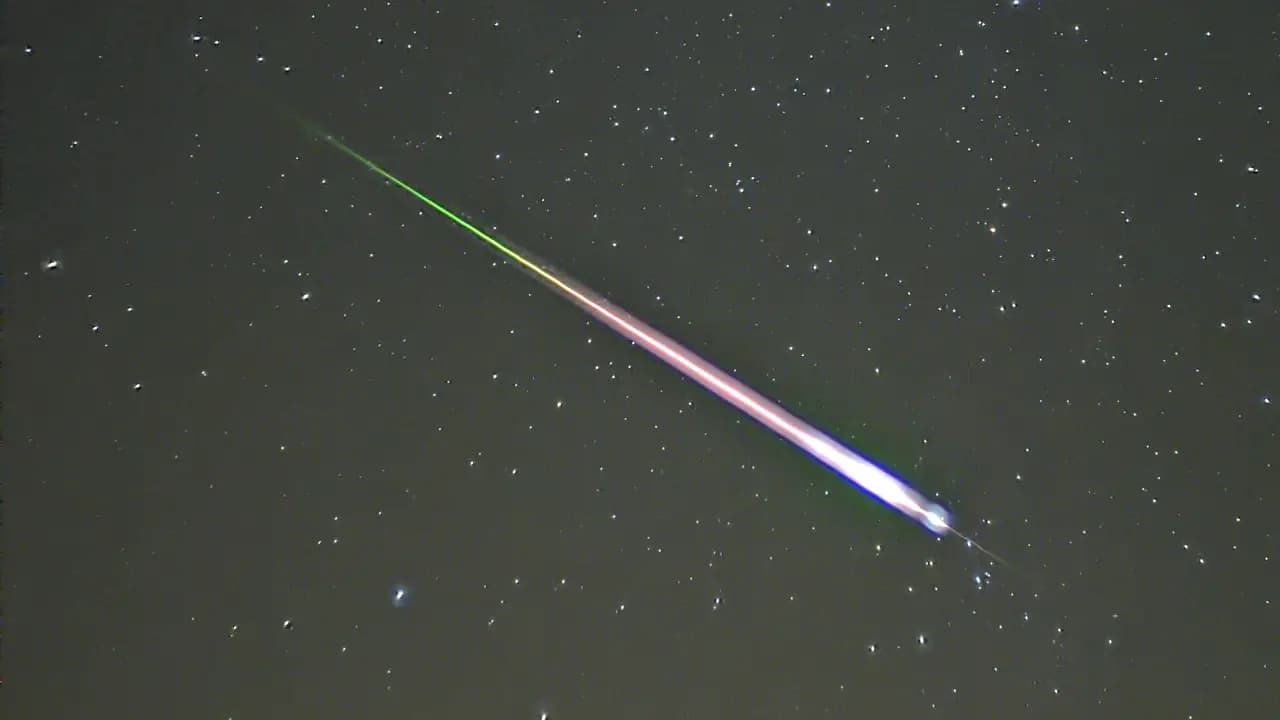
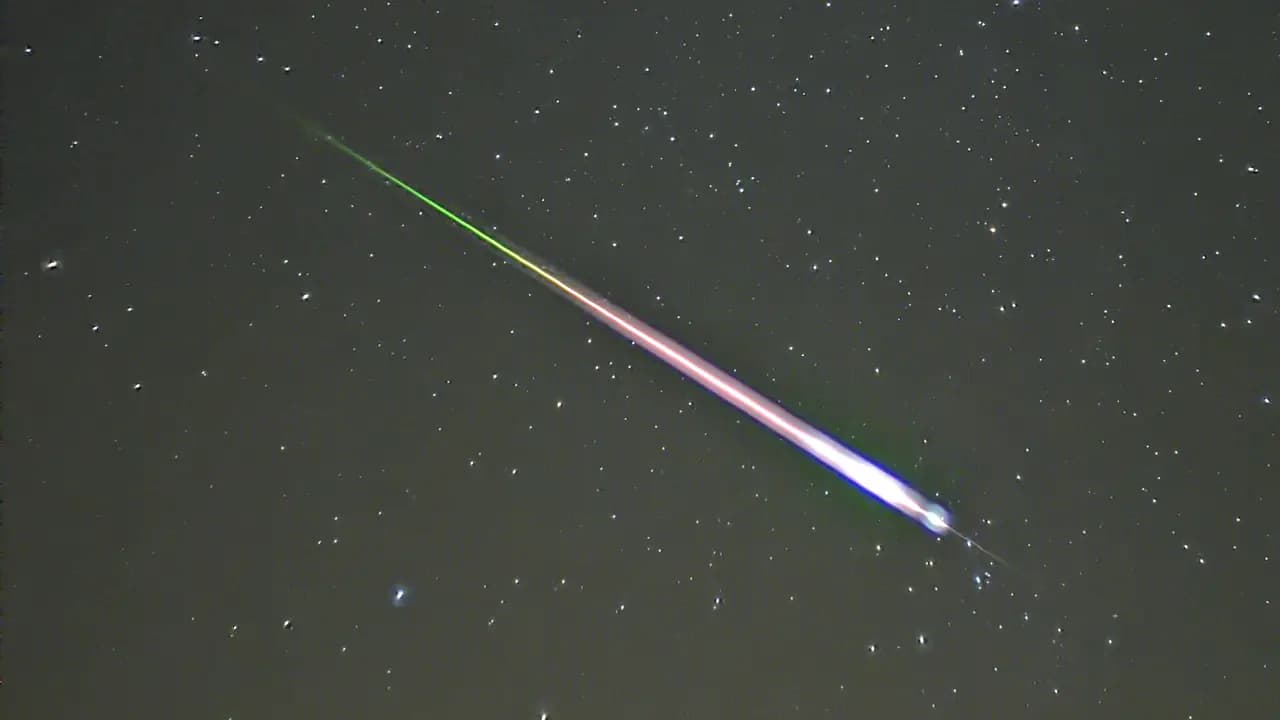
Photo: Navicore / Wikimedia Commons · CC BY 3.0
- The American Meteor Society lists the Leonids' peak night as Nov. 16–17; EarthSky gives 7 p.m. Eastern on Nov. 17, so look both nights.
- The best window is midnight to dawn. In NYC the moon sets at 10:52 p.m. Monday and 11:56 p.m. Tuesday (U.S. Naval Observatory).
- The National Weather Service expects mostly clear skies Monday and Tuesday nights, with lows around 41 and 45.
- Up to 10–15 meteors an hour under dark skies (EarthSky); city lights mean fewer. Jupiter and Mars sit near the radiant in Leo.
- No telescope needed: let your eyes adjust to the dark and watch a wide patch of sky, not just the radiant (NASA).
The Leonid meteor shower peaks this week, and the timing works out for New York: the moon sets before midnight on Monday and Tuesday nights, and the National Weather Service expects mostly clear skies both nights. The best window is from midnight until dawn.
When to look
- Peak: the American Meteor Society lists the peak night as Monday into Tuesday, Nov. 16–17. EarthSky, citing the society's Robert Lunsford, puts the predicted peak at 7 p.m. Eastern on Tuesday, Nov. 17, and says the hours before dawn on both Tuesday and Wednesday mornings are likely best. Going out both nights covers both forecasts.
- Moon: in New York the moon sets at 10:52 p.m. on Monday and 11:56 p.m. on Tuesday, according to the U.S. Naval Observatory, so it will be down during the prime hours.
- Dawn: the sky starts to brighten around 6:15 a.m. (civil twilight), and sunrise is about 6:45 a.m.
- Weather: the National Weather Service forecast for Central Park calls for mostly clear skies Monday night with a low around 41 and Tuesday night with a low around 45. Dress warmly.
What you might see
Under a dark, moonless sky, observers can see 10 to 15 Leonids an hour at the peak, EarthSky says. City lights wash out the fainter ones, so expect fewer from most of New York, and darker spots with an open view of the sky will do better. Leonids are some of the fastest meteors, hitting the atmosphere at about 44 miles per second, and they are often bright and sometimes colorful, according to NASA. They come from debris left by comet 55P/Tempel-Tuttle.
The meteors appear to come from the constellation Leo, which rises around midnight. This year, bright Jupiter and reddish Mars sit close together near that point and will be closest around Nov. 16, EarthSky says, which makes the area easy to find. You don't need to stare at it: NASA says meteors seen away from Leo look longer.
Tips for watching in the city
- Give your eyes time to adjust to the dark, and keep your phone screen off.
- Pick a spot with a wide view of the eastern and overhead sky, away from streetlights. Check the hours of any park or pier before you go; many city parks close overnight.
- No telescope or binoculars needed. A reclining chair or blanket helps.
- Don't expect a storm. The American Meteor Society says Earth won't pass through a dense debris cloud of the kind that produced the famous Leonid storms (1833, 1866, 1966, 1999, 2001 and 2002) until 2099.
For the rest of November's sky, including the Nov. 24 supermoon and Uranus at opposition, see our November night sky guide.


- American Meteor Society2026/2027 Meteor Shower Calendar
- EarthSkyLeonid meteor shower: All you need to know in 2026
- NASA ScienceLeonids
- U.S. Naval ObservatorySun and Moon Data for One Day (New York, Nov. 16–18, 2026)
- National Weather Service7-day forecast for Central Park, New York
Every story links to the reporting and records it’s based on. Our editors write each piece from public reporting and official data, and check it against those sources before it’s published.
Comments
0NSynced with CommunityIn CommunityYour comment is also posted to Community with this story attached, so neighbors can find it and reply there too.
No comments yet
Start the conversation — your comment shows up here and in Community for neighbors nearby.