
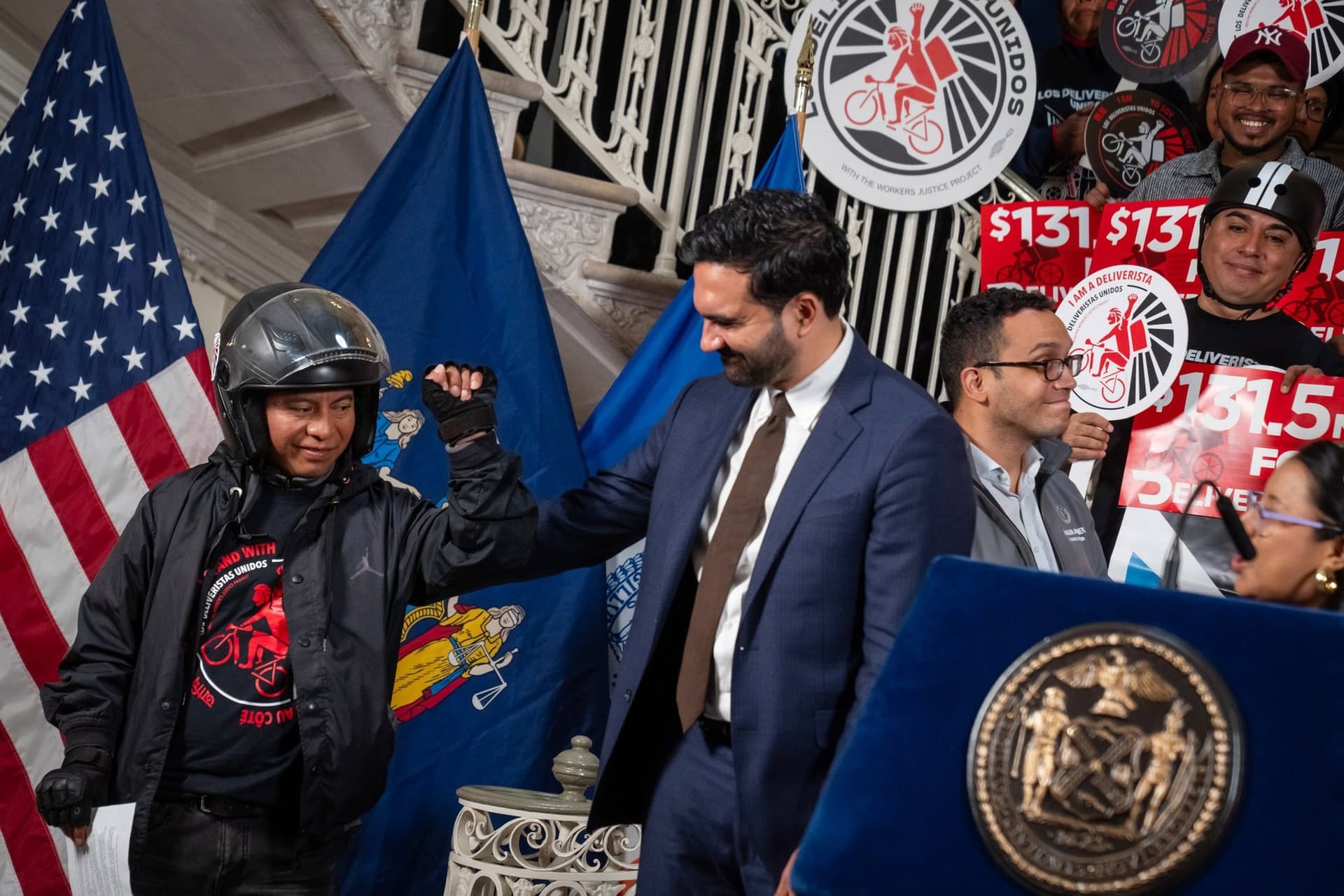
In a landmark decision that marks the largest worker settlement in New York City history, Mayor Zohran Mamdani’s administration has secured a $131.5 million enforcement settlement against DoorDash. The agreement addresses systematic violations of the city’s Delivery Worker Laws, resulting in significant financial restitution for over 260,000 underpaid delivery workers.
Massive Payouts Without Filing Claims
The settlement directs more than $115 million directly to workers, with an additional $16 million allocated to civil penalties and costs. In a move designed to maximize accessibility, the Department of Consumer and Worker Protection (DCWP) stated that workers do not need to file a claim or submit evidence to receive payment. By analyzing DoorDash’s own records, the agency identified every individual owed money for underpayments, late payments, or non-payments occurring between April 22, 2022, and June 28, 2026.
Payments will begin this fall, with emails sent to workers’ last known addresses detailing the amounts owed. Eligible workers can choose electronic payment or a mailed check; those who do not respond will automatically receive a check by mail.
Double Compensation for Wage Theft
To penalize the severity of the wage theft, compensation is calculated at roughly 200 percent of what was underpaid. For example:
- A worker owed $1,000 who received nothing will get $3,000.
- A worker paid $1,000 later than legally allowed will get $2,000.
This multiplier ensures that companies face substantial consequences for violating labor laws, reinforcing the administration's stance that "no corporation is above the law."
Data-Driven Investigation Reveals Systemic Issues
The DCWP’s investigation, bolstered by the Workers Justice Project, utilized terabytes of data from DoorDash, including billions of rows documenting payment transactions. The analysis uncovered:
- Over 152 million individual payment transactions.
- Approximately 110 million working hours tied to the violations.
Key findings included failures to pay thousands of workers entirely and widespread violations of the city’s Minimum Pay Rate of $22.13 per hour (excluding tips). Although DoorDash raised hourly pay in December 2023, it excluded certain categories of trip time and on-call time from compensable calculations, effectively bypassing minimum wage requirements.
New Compliance Monitoring and Software Updates
Beyond immediate payouts, the settlement establishes a rigorous worker-driven compliance monitoring program lasting three years. Key mandates include:
- Monthly Data Reports: DoorDash must submit detailed data reports to the agency quarterly.
- Software Transparency: DoorDash must update its software to ensure no delivery is offered unless the worker’s time is recorded as compensable on-call or trip time. This ends the unlawful practice of paying lower rates for specific legs of "batched" trips.
- Worker Tools: The Workers’ Algorithm Observatory and Workers Justice Project will develop software allowing workers to capture trip and pay data, sharing it directly with the city. DoorDash is barred from penalizing workers for using these tools.
- Internal Controls: DoorDash must appoint an internal compliance monitor to submit annual sworn statements certifying compliance.
Voices from the Frontlines
The settlement has been hailed as a victory for labor rights across the city. Mayor Mamdani emphasized, "When a worker earns a wage, they deserve to be paid that wage – not tomorrow, not after a lawsuit, but on time and in full."
Ligia Guallpa, Executive Director of the Workers’ Justice Project, noted, "For too long, DoorDash treated workers as disposable... We celebrate this victory, but the fight continues." Delivery worker leader Rosendo Tacam shared his personal experience of being deactivated without pay, stating, "Seeing delivery workers get justice is proof that when we organize, we can make companies respect us."
Next Steps for Workers
A dedicated hotline will open at the end of September for workers with questions or those needing to update their email addresses. A second round of payments is scheduled for early 2027 to address remaining calculation errors affecting some DashLink users. Workers experiencing ongoing violations are encouraged to file complaints via nyc.gov/workers.


Comments
No comments yet
Be the first to share your thoughts and start the conversation!