Clocks fall back Sunday: NYC starts 'Dusk and Darkness' push with more evening traffic enforcement
Sunset comes an hour earlier after daylight saving time ends on Nov. 1, putting the evening rush in the dark. The city is adding NYPD enforcement and LinkNYC warnings during the season's deadliest hours for pedestrians.
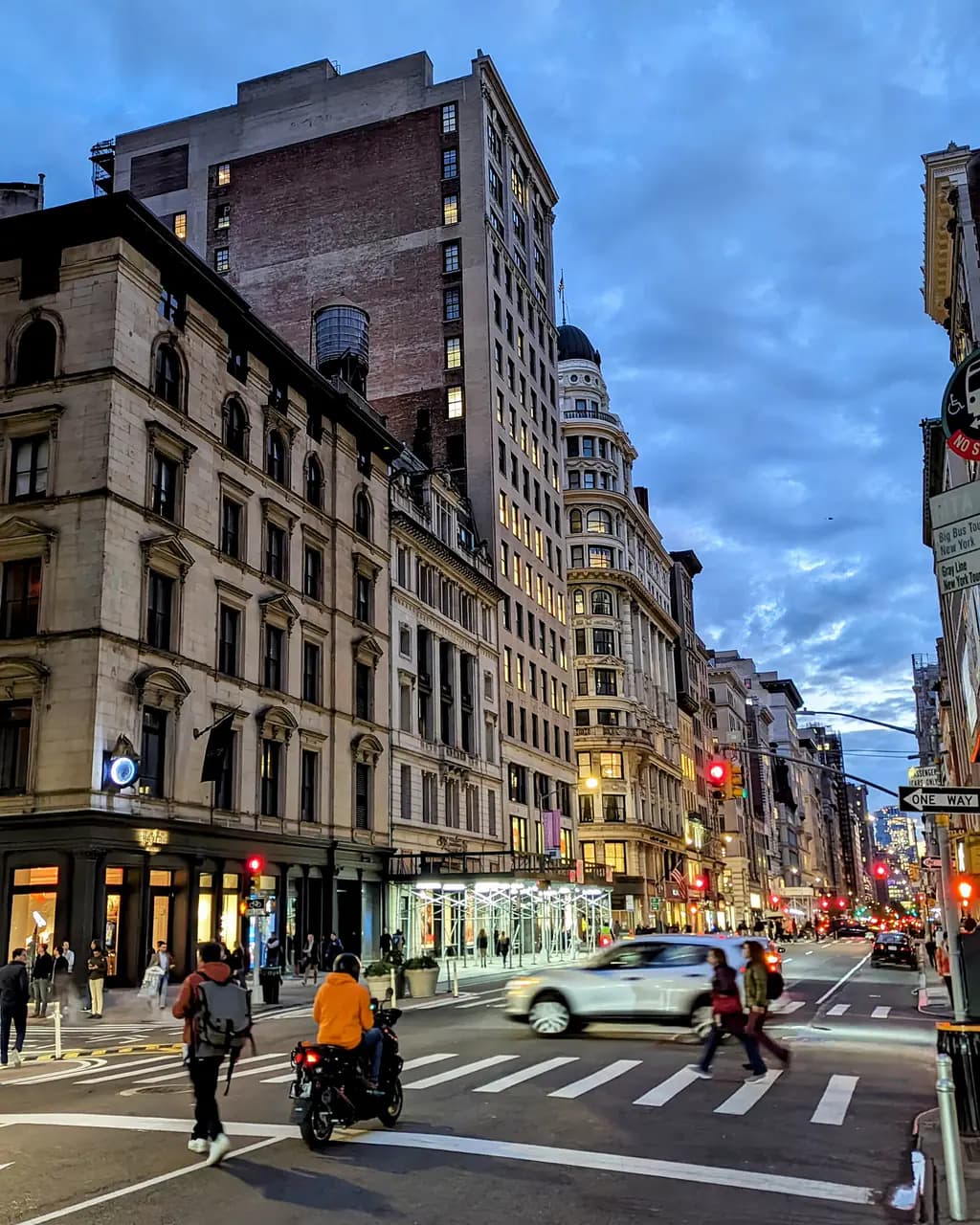
Photo: Eden, Janine and Jim / Wikimedia Commons · CC BY 2.0
- NYC DOT and the NYPD launched the annual Dusk and Darkness campaign on Thursday, ahead of the end of daylight saving time early Sunday, Nov. 1, when sunset moves an hour earlier.
- DOT says fall evenings bring the year's highest fatal pedestrian crash rates because rush hour suddenly falls after dark.
- Since mid-October, the NYPD has stepped up late-afternoon and evening enforcement against speeding, running signals, failing to yield and distracted driving, plus double-parking and blocked crosswalks.
- Warnings will run on thousands of LinkNYC kiosks at dusk, at Staten Island Ferry terminals and on city social media; street teams handed out flyers in all five boroughs Thursday.
- The city says 2026 traffic deaths are among the fewest in 116 years of records, with pedestrian deaths down from the same period in 2025.
New York City's transportation and police officials kicked off their yearly Dusk and Darkness street safety campaign on Thursday, three days before clocks fall back. Daylight saving time ends early Sunday, Nov. 1, and from then on the sun sets an hour earlier, so much of the evening commute will happen in the dark, according to the Department of Transportation.
That shift is why the season is so dangerous. DOT says that in the fall, the hours around sunset become the deadliest of the year for people on foot, because rush-hour traffic suddenly overlaps with poor visibility. "When we turn the clocks back and it gets darker earlier and really coincides with rush hour, there's a spike in pedestrian crashes," DOT Commissioner Mike Flynn told NY1.
What the city is doing
- More evening enforcement: since mid-October, the NYPD has added officers on the late-afternoon and evening shift, on highways and local streets, targeting drivers who speed, disobey signals, fail to yield to pedestrians or drive distracted, DOT said. Traffic enforcement agents are also focusing on double-parked cars and vehicles blocking crosswalks, bike lanes and bus lanes, which cut sight lines.
- Warnings at dusk: messages for drivers and pedestrians will run on thousands of LinkNYC kiosks during dusk hours, which the city expects to reach about 3.3 million impressions, and on electronic billboards in Staten Island Ferry terminals, along with posts on Instagram, X and Facebook.
- Street teams: DOT and NYPD Vision Zero teams handed out tip flyers at busy locations in all five boroughs on Thursday.
- Taxi and fleet drivers: the Taxi and Limousine Commission will remind licensed drivers about darker commutes at its facilities and in classes, and the city's fleet agency says it is using telematics, pedestrian alerts and intelligent speed assistance on city vehicles.
NYPD Chief of Transportation Olufunmilola Obe said the department is trying to prevent collisions "before they happen" as days grow shorter. Schools Chancellor Kamar Samuels noted that many students will be heading home from after-school activities after dark once the clocks change.
Tips for the darker evenings
Officials are asking drivers to keep to the 25 mph citywide speed limit, take more time to look for people crossing, and use caution when turning at intersections. "My message to all New Yorkers is simple: slow down," Flynn told NY1. Pedestrians are advised to watch for turning vehicles and to cross at traffic lights and in crosswalks when walking in the dark, NY1 reported.
A safer year so far
The campaign, which began in 2016, comes during what the city calls one of its safest years on record. DOT says traffic deaths so far in 2026 are among the fewest in the city's 116 years of recorded history, with both overall traffic deaths and fatal pedestrian crashes down from the same period last year. Under its Vision Zero Reimagined plan released last month, the city also plans a connected streetlight network that detects outages automatically and speeds repairs, including under elevated trains and highways.
Sunday is also marathon day, so expect road closures across the city; see our guide to Sunday's marathon closures. For what the time change means for sunset, see our earlier explainer.
- NYC Department of TransportationVision Zero: Mamdani Administration Announces Return of Dusk and Darkness, Groundbreaking Campaign Warning New Yorkers of Heightened Crash Danger During Fall Evenings
- NY1City launches annual campaign to keep pedestrians safe as clocks fall back
Every story links to the reporting and records it’s based on. Our editors write each piece from public reporting and official data, and check it against those sources before it’s published.
Comments
0NSynced with CommunityIn CommunityYour comment is also posted to Community with this story attached, so neighbors can find it and reply there too.
No comments yet
Start the conversation — your comment shows up here and in Community for neighbors nearby.