NYC's snow plan for this winter: $30-an-hour shovelers, 120 new snowblowers and more plows for Staten Island hills
At a City Council hearing Monday, Sanitation Commissioner Gregory Anderson laid out what changes after last winter's two big storms. Here is how to sign up to shovel, and what happens to the PlowNYC data bill.
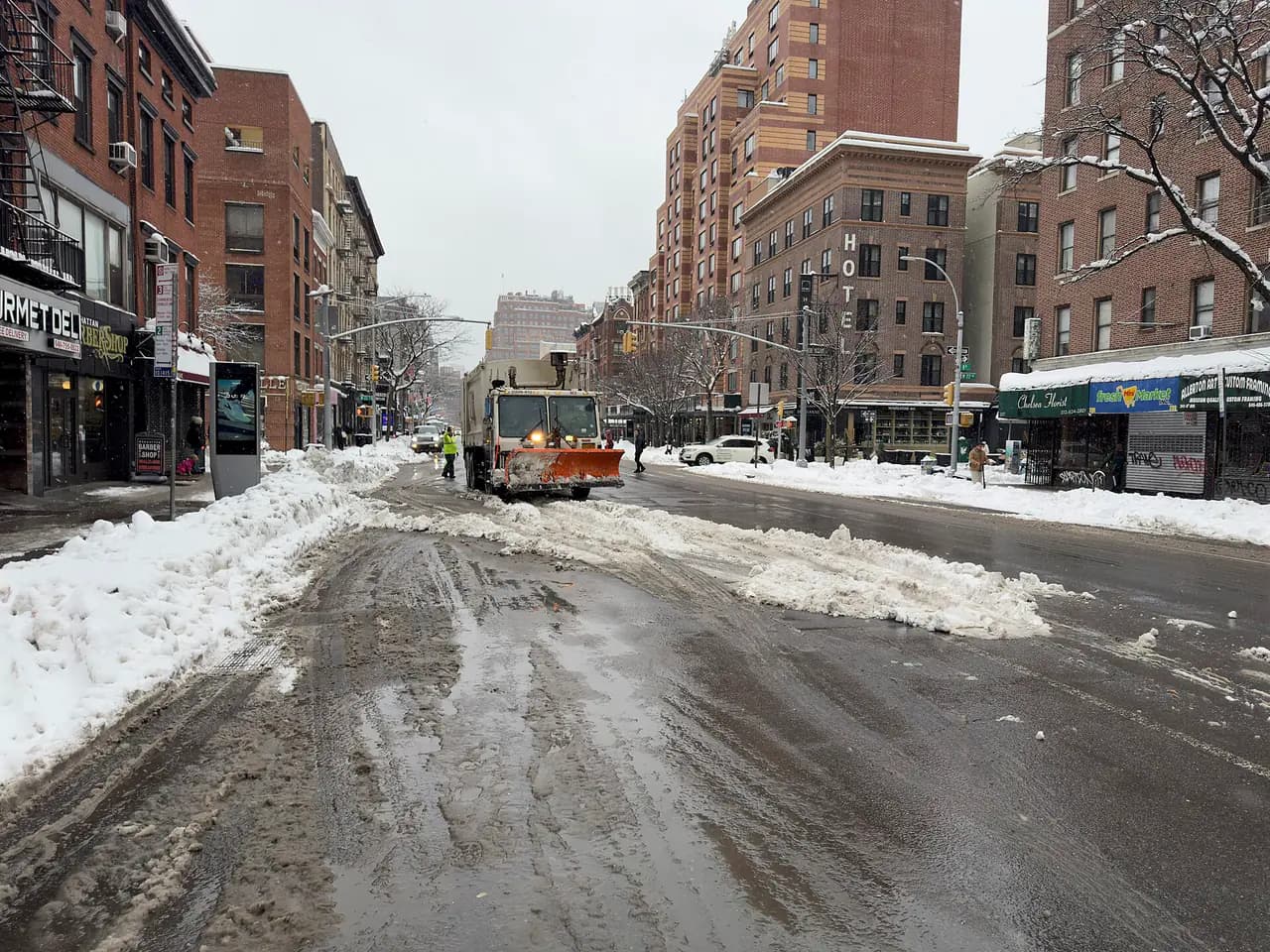
Photo: Tzim78 / Wikimedia Commons · CC BY-SA 4.0
- DSNY told the Council on Nov. 2 it starts this winter with 129 more sanitation workers and 93 more supervisors than a year ago, plus 2,200+ vehicles that can become plows and 250,000 tons of salt.
- Emergency Snow Shovelers will keep the $30-an-hour rate, get a paid four-hour orientation if registered by the end of November, and be paid on the regular two-week city payroll.
- More than 2,600 shovelers have already registered, versus a few dozen at this time last year. Walk-in registration is open four days a week at the Jobs NYC Center in Lower Manhattan.
- Staten Island gets eight new plow routes in its hilliest areas, and 678 more plows and spreaders get flexible composite blades. DSNY bought 120 snowblowers for corners and bus stops.
- On Int. 1042, which would publish historical PlowNYC data, DSNY said it already meets the bill's spirit through Open Data and that the rest needs budget money.
New York City's Sanitation Department says it enters this winter with more workers, new equipment and a revamped program for paid volunteer shovelers, after last season's two storms of more than a foot of snow left crosswalks, bus stops and bike lanes frozen for weeks. Commissioner Gregory Anderson laid out the plan Monday at a City Council Sanitation Committee hearing, according to his written testimony.
What changes this winter
- More staff: 129 more sanitation workers and 93 more supervisors than this time last year, with another class of up to 40 workers on the way.
- Staten Island hills: eight new plow routes in the borough's steepest, narrowest areas, cutting the mileage per route by more than 25%, plus more plow trucks and V-plows assigned there during storms.
- New blades: flexible rubber-ceramic composite blades, tested last year, go on 678 more plows and spreaders, mainly for highways, elevated roads and hills. DSNY says they clear better and damage roads less.
- Corners and bus stops: 120 new snowblowers light enough to move from spot to spot, and extra rented vans to move crews and tools.
- Night Plow: the winter schedule, with more workers on early morning and late-night shifts, starts this week.
The department also has more than 2,200 vehicles that can be fitted as plows, more than 700 salt spreaders, 47 machines for protected bike lanes, 7,000 uniformed workers trained for snow and 250,000 tons of salt, Anderson said.
Want to be paid to shovel snow?
The Emergency Snow Shoveler program helped clear 135,000 crosswalks and 34,000 bus stops last winter, when sign-ups jumped from about 1,500 in early January to more than 7,800, according to the testimony. This year:
- The $30 per hour rate, first paid on an emergency basis last winter, is now permanent.
- Anyone registered by the end of November gets a paid four-hour orientation and is preloaded into city payroll, so they are paid on the regular two-week cycle instead of waiting six weeks or more.
- More than 2,600 people have registered so far. Walk-in registration started Monday, four days a week, at the Jobs NYC Center in Lower Manhattan, and more registration events are planned.
Snow information, the live PlowNYC map, property owners' sidewalk rules and the borough snow plans are at nyc.gov/snow.
The PlowNYC data bill
The committee also heard Int. 1042, sponsored by Council Member Ty Hankerson, which would require DSNY, with the Transportation and technology departments, to publish and keep a public website of current and historical plowing data. Today PlowNYC shows when a block was last plowed but does not keep a history, Gothamist reported. In a memo, Hankerson wrote that plowing is "often a contentious issue" with accusations that some neighborhoods get more plows than others.
Anderson said DSNY "has already met the spirit" of the bill because it posts plowing data on the city's Open Data portal, updated every 15 minutes, with more than 475 million records covering ten years of storms. Meeting the letter of the bill would take more technology money and should be discussed in the budget, he said.
Federal forecasters expect a warmer-than-average winter for the city, partly because of El Niño, but meteorologists say a major snowstorm is still possible, according to Gothamist.
- NYC Department of SanitationTestimony of Gregory Anderson, Commissioner: Oversight, City's Snow Removal and Winter Storm Response (Nov. 2, 2026)
- GothamistNYC Council to scrutinize snow removal plans as winter approaches
- intro.nycInt 1042-2026: Publication and visualization of snow plowing operations data
Every story links to the reporting and records it’s based on. Our editors write each piece from public reporting and official data, and check it against those sources before it’s published.
Comments
0NSynced with CommunityIn CommunityYour comment is also posted to Community with this story attached, so neighbors can find it and reply there too.
No comments yet
Start the conversation — your comment shows up here and in Community for neighbors nearby.