
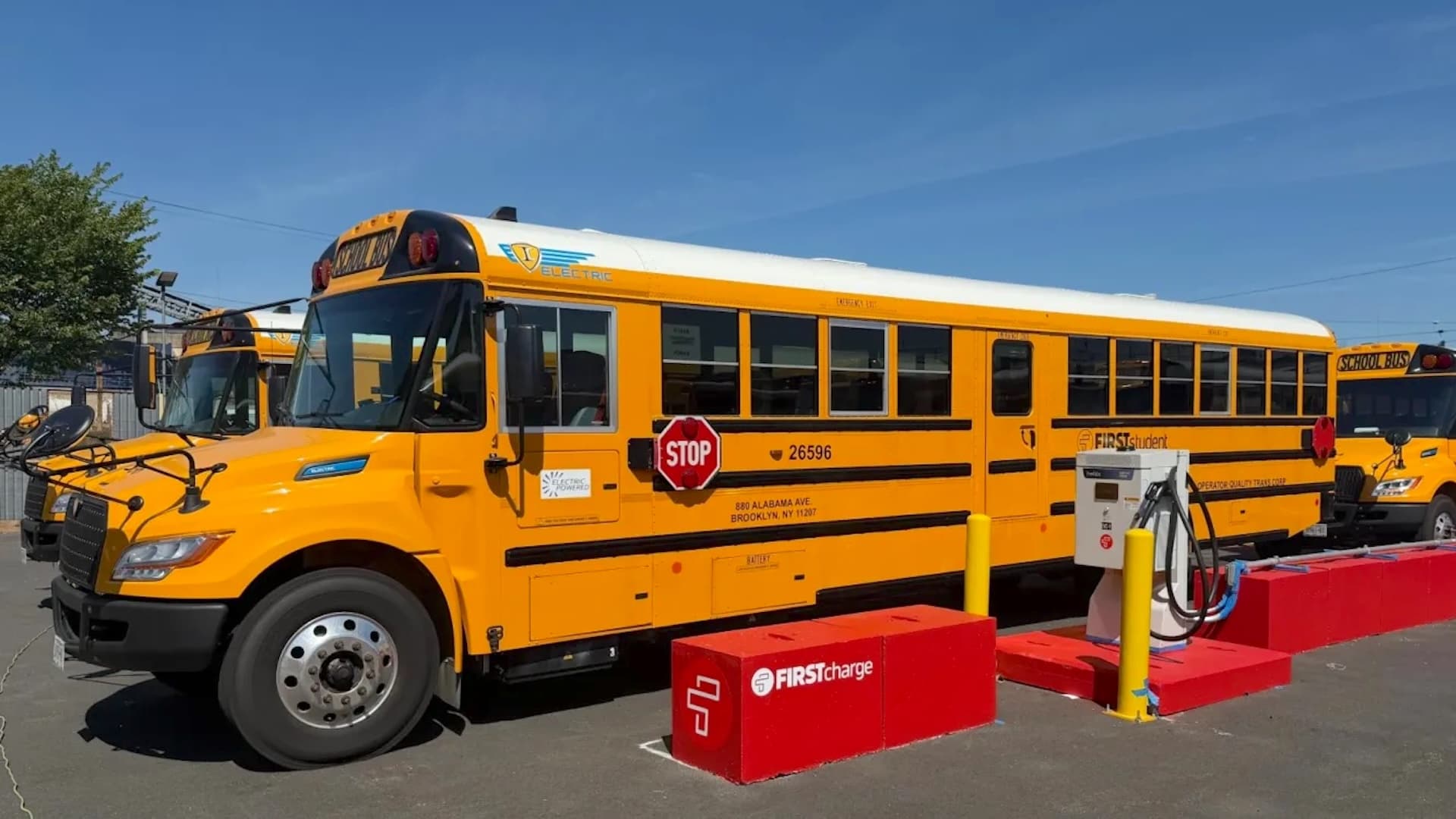
New York City is accelerating its transition to green transportation with a major expansion of its electric school bus fleet. Following a successful pilot project, the city has discovered that a simplified charging infrastructure can reduce construction costs by 20%, offering a scalable model for dense urban environments nationwide.
A Smarter Way to Charge
The initiative adds 40 new electric school buses to NYC Public Schools in Brooklyn and Queens. The key innovation lies in the charging setup: instead of digging up paved bus yards to bury electrical lines, First Student utilized an above-ground system called First Charge. By running electrical lines overhead, the project significantly reduced disruption, sped up installation, and lowered upfront infrastructure expenses.
"Eliminating the need to bury the service line to these chargers lowers the upfront costs for First Student and is a strategy that other fleet owners can replicate to save money and complete projects more quickly," said Vicki Kuo, Senior Vice President of Customer Energy Solutions at Con Edison.
Supporting the Transition
This pilot was supported by Con Edison and the New York State Energy Research and Development Authority (NYSERDA). Through NYSERDA's New York School Bus Incentive Program, the project secured six electric school bus vouchers and assistance in converting four diesel buses to electric power.
This move aligns with strict state mandates:
- All newly purchased school buses must be zero-emission by 2027.
- The entire fleet must meet this standard by 2035.
For students and communities, this shift promises quieter streets, cleaner air, and reduced exposure to harmful diesel pollution near schools.
Managing Energy and Future Tech
To optimize efficiency, First Student employs load-management software that schedules charging during off-peak hours when electricity rates are lower. This helps control energy costs and prevents strain on the local grid. Looking ahead, the company is exploring additional clean energy features for its Brooklyn facilities, including solar power and a smart energy hub.
Kevin Matthews, Head of Electrification at First Student, emphasized the importance of collaboration: "Deploying electric school buses at scale requires more than vehicles; it requires the right infrastructure, technology, and utility partnership." He noted that this efficient approach helps overcome traditional cost and construction barriers in dense cities.
National Context
This local success reflects a broader national trend. Orders for electric school buses have risen tenfold since early last year across the U.S. Districts can see lifetime savings of up to $173,000 per bus, while many EV owners cite cheap charging and lower maintenance as key drivers for switching. As policies like Los Angeles' extra $4,000 incentive for low-income residents show, the push toward zero-emission transport is gaining momentum globally.





Comments
No comments yet
Be the first to share your thoughts and start the conversation!