Biden to Address UN for the Last Time as Dictators Skip Out on NYC Summit
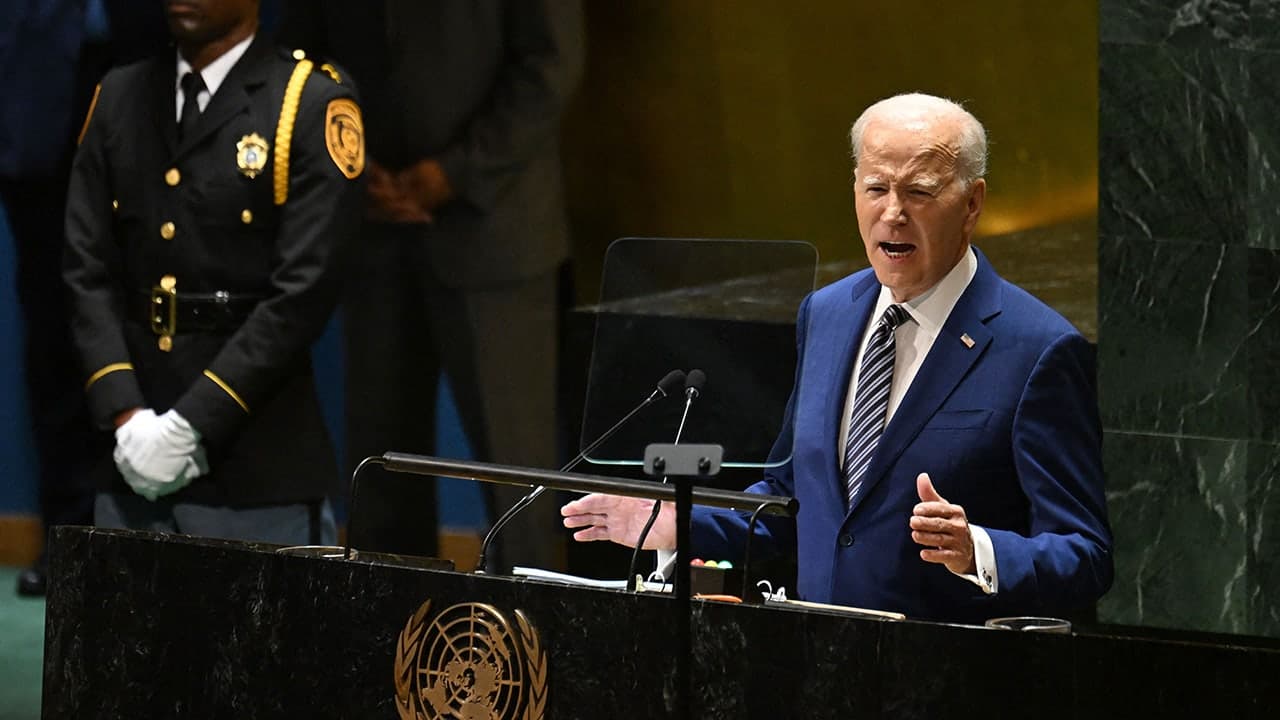
Biden Addresses UN Amidst Absence of Key Authoritarian Leaders
President Biden is set to deliver his final address to the UN General Assembly on Tuesday, as leaders and representatives from 134 countries gather in New York City. Notably absent from the convention are some of the world's most prominent authoritarian leaders, including Russian President Vladimir Putin, Chinese President Xi Jinping, and North Korean leader Kim Jong Un.
Despite the absence of these key figures, Iranian President Masoud Pezeshkian is expected to give a speech, facing international pushback due to Tehran's involvement in terrorism and interference in the US elections. Pezeshkian told reporters, "We don’t want war… we want to live in peace." However, his statements are unlikely to be taken at face value.
Biden is set to "rally global action to tackle the world's most pressing challenges," according to White House press secretary Karine Jean-Pierre. The administration plans to prioritize efforts to end global conflicts, increase support for humanitarian aid workers, and create a more inclusive international system.
U.N. Summit Faces Criticism for Focusing on the Future Instead of the Present
One U.N. expert, Hugh Dugan, raised concerns about the summit's focus on the "Summit of the Future" event, arguing that it should be a "Summit of the Present" to address pressing global challenges, including ongoing wars in Ukraine, Israel, Haiti, Sudan, and Myanmar.
Dugan highlighted the lack of accountability within the U.N. and criticized the absence of authoritarian leaders, suggesting it reflects a lack of concern for showing respect to the international body. He questioned whether it is easier for the top U.N. official to push for major changes than to address mismanagement and internal politics within the organization.
A Divided U.N. Faces Uncertain Future
The U.N. Secretary-General, Antonio Guterres, acknowledged the "out-of-control geopolitical divisions" and "runaway" conflicts, as well as the challenges posed by climate change and artificial intelligence. He highlighted the need for global institutions to adapt to a changing world.
However, the U.N.'s future remains uncertain, with significant divisions between the U.S., Britain, and France against Russia and China. Dugan believes that the U.N. Security Council still holds significant standing, but its ability to convene leaders around the table is being challenged by the absence of key figures and the persistent conflicts facing the globe.
- #biden
- #un
- #putin
- #xijinping
- #internationalrelations
Comments · 0