Voters approve Charter change to speed bike and bus lane projects and limit lawsuit delays
Proposition 3, one of five Mamdani-backed Charter amendments that passed Nov. 3, shortens approvals for major street-safety projects and closes procedural loopholes that opponents used to stall them in court.
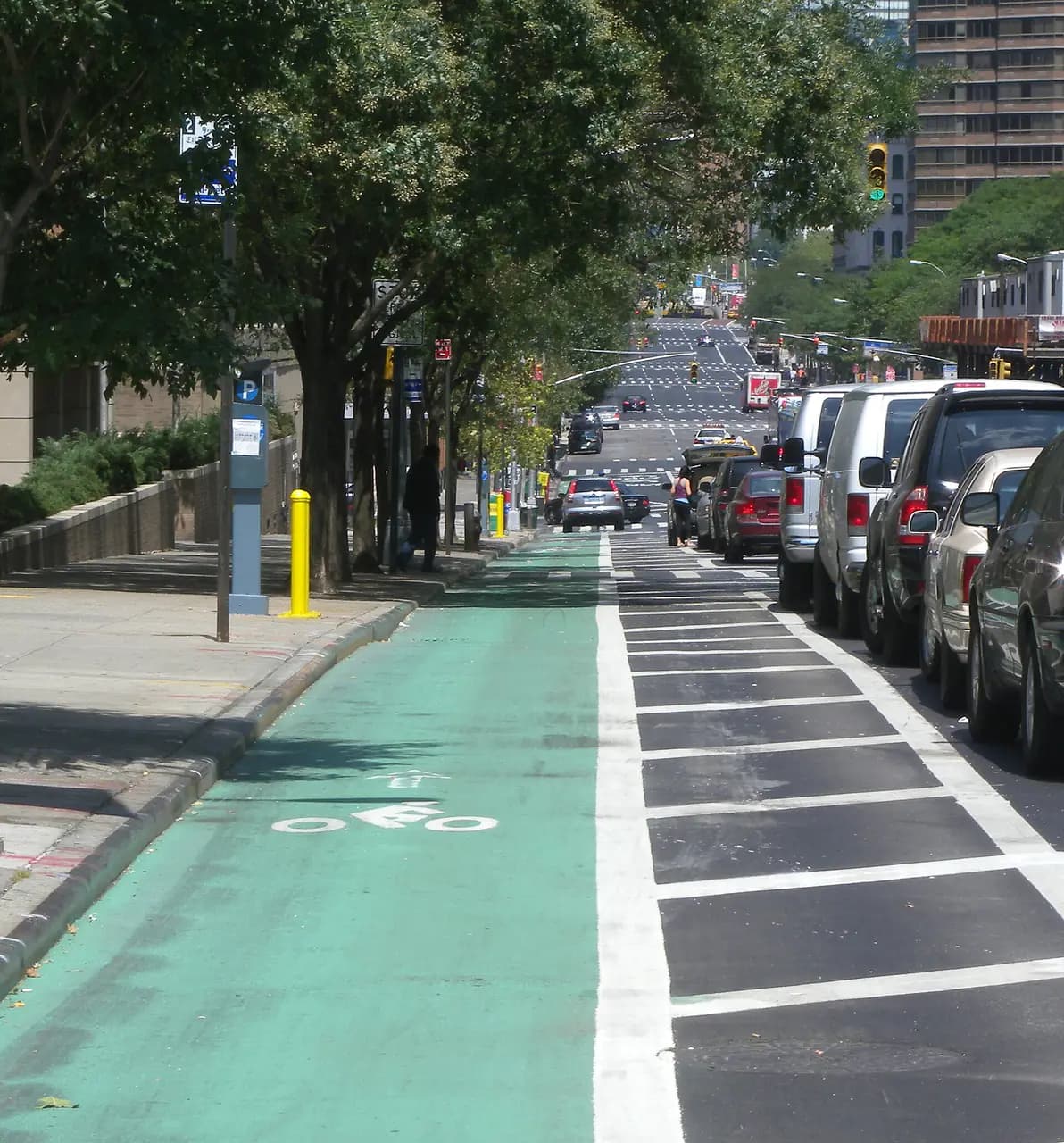
Photo: Jim.henderson / Wikimedia Commons · CC0
- Ballot Proposition 3 passed with roughly two-thirds support on Nov. 3 as part of a sweep of five City Charter amendments from Mayor Zohran Mamdani’s Commission on Government Efficiency.
- The change targets “Major Transportation Projects” — generally 1,000 consecutive feet of roadway or four consecutive blocks, and any project that includes a bike lane — by trimming multi-agency consultation steps that COGE said caused substantial delays.
- COGE estimated the reforms could cut construction timelines for bike and bus lane–type projects by about 33%; advocates say the bigger win is fewer lawsuit delays over missed firehouse or agency checklists.
- DOT can start work before a community-board presentation when it finds a “risk of significant injury” without immediate action, according to amNewYork’s account of the amendment.
- Transportation Alternatives, Bike New York and Riders Alliance framed the vote as support for faster street-safety and bus-priority work, including the city-state Next Stop bus plan.
New York City voters on Tuesday approved a City Charter change meant to get bike lanes, bus lanes and other street-safety projects built faster — and to make it harder for opponents to stop them over paperwork fights.
Ballot Proposition 3 was one of five amendments drafted by Mayor Zohran Mamdani’s Commission on Government Efficiency (COGE). All five passed with at least 61% of the vote citywide, The City Reporter reported election night; Staten Island was the only borough where a majority rejected the package. amNewYork said Proposition 3 alone drew more than a million yes votes, nearly 66% of those who cast a ballot on the question.
What “Major Transportation Projects” means
The amendment focuses on what the city calls Major Transportation Projects: work that affects about 1,000 consecutive feet of roadway or four consecutive blocks, whichever is less. Any project that includes a bike lane counts, regardless of size, amNewYork reported, citing COGE.
Before the change, the agency advancing such a project — usually the Department of Transportation — had to consult multiple city agencies, document those talks, notify local elected officials and the community board, and brief the board on request. One sticking point was a requirement that the Fire Department confer with firehouses in the project area, which COGE said caused “substantial delays.”
Fewer lawsuit traps, shorter timelines
COGE estimated the reforms would cut construction timelines for projects like bike and bus lanes by about 33%. Advocates told amNewYork the larger effect is legal: fewer chances for a missed checklist item to wipe out a project in court. Transportation Alternatives pointed to a 31st Street bike-lane fight in Astoria that forced DOT to scrap work and start over after a judge sided with local business owners.
The Charter change also lets DOT begin work before presenting to a community board when the agency finds a “risk of significant injury” without immediate action — a tool aimed at streets with the worst crash records.
What advocates are saying
Ben Furnas of Transportation Alternatives called the margin “a huge vote of confidence” for the administration’s street-safety and mobility agenda. Bike New York’s Jon Orcutt said public polls have long shown roughly 60/40 support for bike lanes. Riders Alliance’s Danny Pearlstein tied the change to the city-state Next Stop plan to speed buses on 50 priority corridors: “If you have 50 priority projects, you don’t want to be in court.”
Other amendments in the same package speed outdoor-dining and public-space permits, large-contract approvals, construction permitting and create a rainy-day fund plan — covered in The City Reporter’s election-night roundup. Implementation details will show up in agency rulemaking; this story tracks the street-safety piece.
- amNewYorkNew Yorkers’ approval of midterm ballot question will ensure bike and bus lane projects are finished faster
- The City ReporterMamdani Ballot Proposals on Public Space, Street Safety and More Pass in NYC
Every story links to the reporting and records it’s based on. Our editors write each piece from public reporting and official data, and check it against those sources before it’s published.
Comments
0NSynced with CommunityIn CommunityYour comment is also posted to Community with this story attached, so neighbors can find it and reply there too.
No comments yet
Start the conversation — your comment shows up here and in Community for neighbors nearby.