MTA starts $1.9 billion job to replace 1930s signals on the A and C in Brooklyn and Queens; first shutdown Nov. 7
The agency's largest signal project ever will bring computer-based train control to the Fulton and Liberty Avenue lines from High Street to Ozone Park-Lefferts Boulevard by 2032. A trains skip three Queens stations for nine days next month.
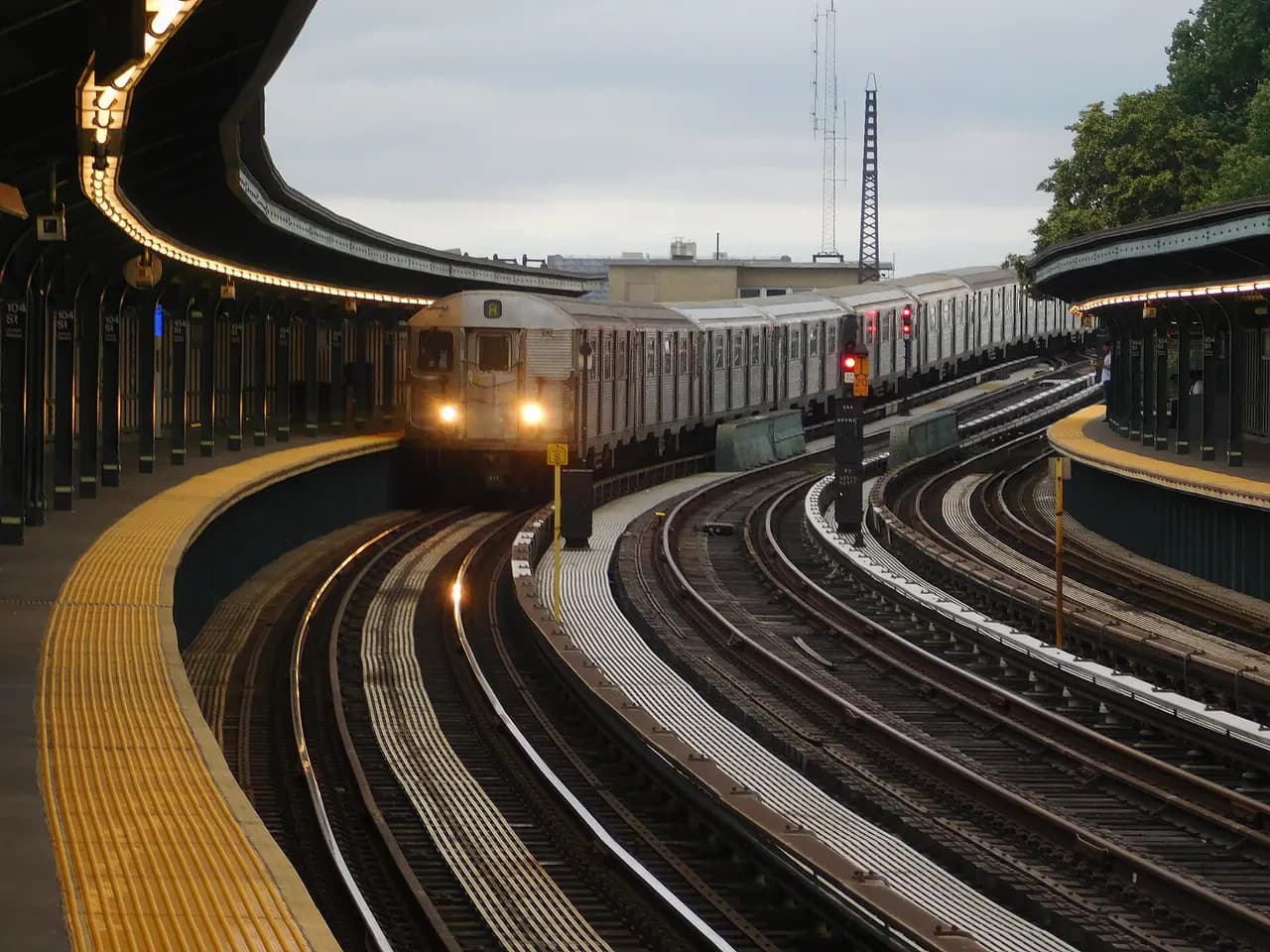
Photo: Adam Moss / Wikimedia Commons · CC BY-SA 2.0
- The $1.9 billion project installs communications-based train control (CBTC) on the A and C between High Street in Brooklyn and Ozone Park-Lefferts Boulevard in Queens, replacing signals that date to the 1930s (Gothamist, amNY).
- It covers 42 miles of track and 23 stations that serve about 350,000 weekday riders, amNY reported; it is paid for almost entirely with congestion pricing revenue.
- First outage: from 12:30 a.m. Saturday, Nov. 7, to 5 a.m. Monday, Nov. 16, no A trains between Rockaway Blvd and Ozone Park-Lefferts Blvd; free T366 shuttle buses stop at 104 St and 111 St (MTA).
- During that outage crews replace switches and about 250 feet of track near 104 St; Lefferts-bound A trains run to Howard Beach-JFK Airport instead.
- The work isn't expected to finish until 2032; the MTA says the next signal megaproject is the B, D, F and M under Sixth Avenue.
The MTA is starting the biggest signal replacement in its history on the A and C lines in Brooklyn and Queens, a $1.9 billion project that will swap equipment dating to the 1930s for a modern computer-based system, the agency and Gov. Kathy Hochul announced Thursday, Gothamist and amNewYork reported.
The new system, called communications-based train control or CBTC, will run along the Fulton Street and Liberty Avenue lines between High Street in Brooklyn and Ozone Park-Lefferts Boulevard in Queens. According to amNY, the work covers 42 miles of track and 23 stations that serve about 350,000 riders each weekday. Gothamist reported the project isn't expected to wrap up until 2032.
What changes for riders first
The first service disruption comes right after Election Day. From 12:30 a.m. Saturday, Nov. 7, to 5 a.m. Monday, Nov. 16, A trains will not run between Rockaway Blvd and Ozone Park-Lefferts Blvd, according to the MTA's service notice:
- A trains that normally go to Ozone Park-Lefferts Blvd will run to Howard Beach-JFK Airport instead.
- Free T366 shuttle buses run at all times between Rockaway Blvd and Ozone Park-Lefferts Blvd, stopping at 104 St and 111 St. Transfer at Rockaway Blvd, which is an accessible station.
- Crews will replace switches and track near 104 St; amNY said the first phase replaces about 250 feet of track between 104 St and 99 St.
Why it matters
With the old signals, dispatchers can only tell which section of track a train is on. CBTC tracks each train's exact location and speed, which lets the MTA safely run trains closer together and more often. "We are saying goodbye to those 1930s signals," MTA Chair Janno Lieber said at a news conference, according to Gothamist. Lieber has called signal problems the top cause of subway delays.
The technology already runs the entire 7 and L lines and parts of the E, F, M and R in Queens and Brooklyn. On the 7, on-time performance rose from 68% to 91% after CBTC was installed, and E trains in Queens got about 10% faster, the MTA told amNY. The A is the system's longest line and serves about 750,000 New Yorkers on an average weekday, Gothamist said.
Who pays, and the track record
The project is funded almost entirely by revenue from congestion pricing, the $9 base toll for driving into Manhattan below 60th Street, amNY reported. "Congestion pricing keeps delivering wins for New Yorkers," Hochul said in a statement. The MTA board approved the contracts nearly a year ago.
The agency's other signal jobs have not all gone smoothly. A 2025 report by an MTA consultant found four ongoing signal projects, including on the A, C and E in Manhattan, the F in Brooklyn and Queens, and the G, were nine months to three years behind schedule, and two were over budget, Gothamist reported. MTA construction chief Jamie Torres-Springer said the next signal megaproject will cover the B, D, F and M under Sixth Avenue, according to Gothamist. ABC7 also reported the launch.
- GothamistMTA to begin 6-year project to upgrade signal tech on A and C lines in Brooklyn and Queens
- amNewYorkMTA starts $1.9 billion resignalling, track replacement work on A/C lines in Brooklyn and Queens
- MTAService changes on the A line in November 2026
- ABC7 New YorkMTA begins major signal upgrade on A and C lines
Every story links to the reporting and records it’s based on. Our editors write each piece from public reporting and official data, and check it against those sources before it’s published.
Comments
0NSynced with CommunityIn CommunityYour comment is also posted to Community with this story attached, so neighbors can find it and reply there too.
No comments yet
Start the conversation — your comment shows up here and in Community for neighbors nearby.