Nearly 1.3 million New Yorkers used food pantries last year, and most live in working households
A Robin Hood and Columbia report released Monday finds 31% of the city faced food hardship in 2025. Its authors warn pantries cannot make up for federal SNAP cuts.
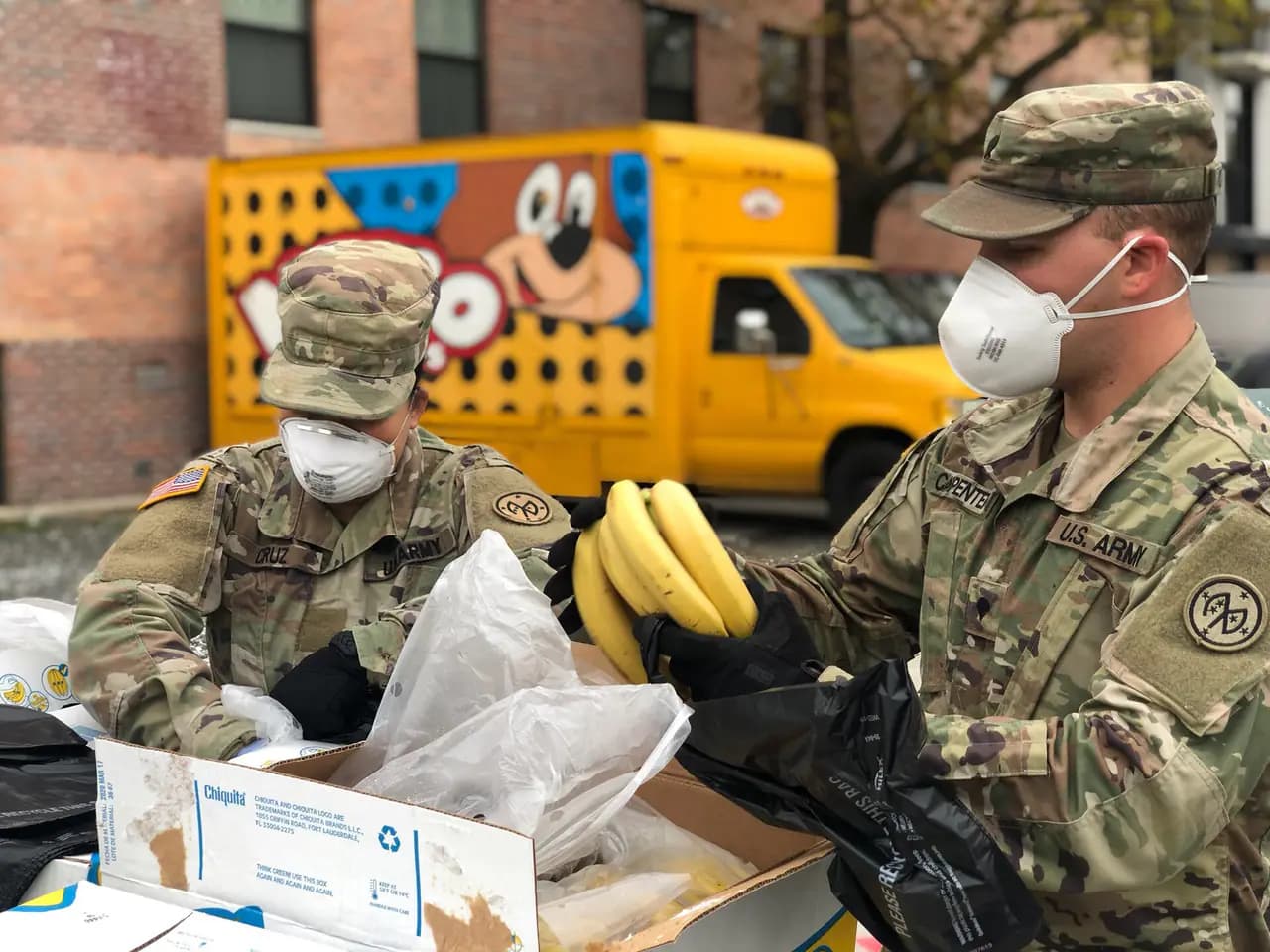
Photo: The National Guard / Wikimedia Commons · Public domain
- About 1.3 million New Yorkers, roughly 15% of the city, used a food pantry or other free food provider in 2025 (Robin Hood / Columbia Poverty Tracker).
- 55% of pantry users work or live with a spouse or partner who works; only 6% are working-age adults without work or health problems.
- 31% of New Yorkers, more than 2.6 million people, ran out of food or worried they would in 2025; about 500,000 faced severe food hardship.
- Pantry food lifts about 51,000 New Yorkers out of poverty, but the authors say pantries complement SNAP and WIC and cannot replace them.
- The data predate recent SNAP changes; about 26,500 New Yorkers lost benefits on Oct. 1 (amNY).
Nearly 1.3 million New Yorkers, about 15% of the city, got food from a pantry or another free food provider in 2025, and more than half of them were working or lived with a partner who works, according to a new Poverty Tracker report from Robin Hood and Columbia University's Center on Poverty and Social Policy. The report was released Monday at a press conference at Food Bank For New York City, amNY reported.
The numbers
- Food hardship is common: 31% of New Yorkers, more than 2.6 million people, sometimes or often ran out of food or worried they would before they had money to buy more. About 500,000 people, 6% of the city, faced severe food hardship.
- Working households: 55% of pantry users work or live with a working spouse or partner. Of the rest, most are past working age (18%) or have a severe health problem (19%). Only 6% are working-age adults who didn't work and reported no health problem.
- Shocks: 47% of pantry users had a major financial shock in a typical year, such as losing a job or benefits or facing a big unexpected bill. One in five had a major health shock.
- Other hardships: 74% also faced at least one other hardship, such as housing instability, trouble paying for energy, or skipping medical care because of cost. Only 3% had recently been homeless.
What pantries can and can't do
The value of pantry food lifts about 51,000 New Yorkers out of poverty, the report estimates. Even if every pantry user and everyone facing food hardship used a pantry weekly, the authors say it would lift a quarter of a million people or more out of poverty and still cover only about 15% of what it would take to end poverty in the city. Their conclusion: pantries are a complement to SNAP and WIC, not a substitute.
Robin Hood CEO Richard R. Buery Jr. said pantries "cannot absorb cuts to SNAP on their own." The report's recommendations include more money for emergency food providers, more help enrolling in SNAP and WIC, stronger protection against EBT benefit theft and making sure families claim the tax credits they're owed.
Why it matters now
The data run through 2025, so they don't capture the latest federal changes. About 26,500 New Yorkers lost SNAP benefits on Oct. 1 under new rules, amNY noted, and the city has launched an effort to help them get benefits back. If you need help, our guide on how to apply for SNAP, HEAP, Fair Fares and the rent freeze walks through the steps.


- Robin HoodAs SNAP Shrinks, Nearly 1.3 Million New Yorkers Rely on Food Pantries and More Than Half Are Working Or Live With Someone Who Does
- amNYNearly 1.3 million New Yorkers, including those employed, rely on food pantries as SNAP shrinks
Every story links to the reporting and records it’s based on. Our editors write each piece from public reporting and official data, and check it against those sources before it’s published.

Comments
0NSynced with CommunityIn CommunityYour comment is also posted to Community with this story attached, so neighbors can find it and reply there too.
No comments yet
Start the conversation — your comment shows up here and in Community for neighbors nearby.