Mamdani's POWER Act would let New Yorkers sue businesses over 'unfair' practices. Business groups are pushing back
The bill, introduced in the City Council on Thursday, would create a city right to sue over unfair, abusive or unlawful conduct, not just deception. The Manhattan Chamber of Commerce calls it an opening for lawsuit mills.
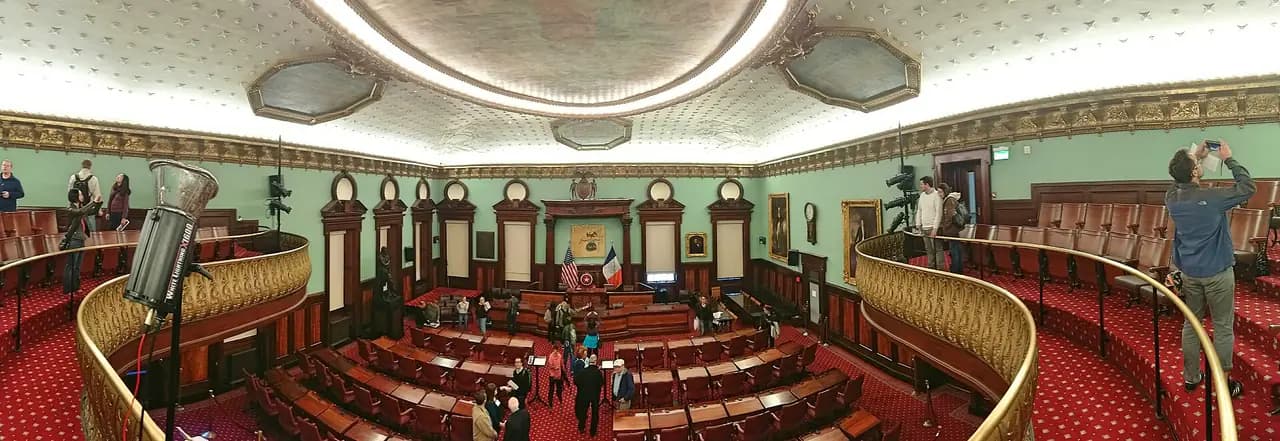
Photo: Lwsmith10128 / Wikimedia Commons · CC BY-SA 4.0
- Council Member Harvey Epstein introduced the POWER Act on Mayor Zohran Mamdani's behalf at the City Council's Oct. 8 stated meeting.
- State law lets individuals sue only over deceptive practices. The bill would let people, workers, tenants, small businesses and nonprofits sue over unfair, deceptive, abusive or unlawful practices and unfair competition, the city says.
- The city's examples include tenant unions suing landlords, taxi drivers suing lenders over unconscionable loan terms and nonprofits suing on behalf of their members and the public.
- The Manhattan Chamber of Commerce opposes the bill as written, citing $2,500 in damages per violation plus attorney's fees and an exemption only for businesses with four or fewer employees.
- Council Speaker Julie Menin has not signaled support, NY1 reported. The bill would typically need a committee hearing and vote before reaching the full Council.
Related clip
A bill backed by Mayor Zohran Mamdani would give New Yorkers a new way to take businesses to court, and the city's business groups are already lining up against it.
The POWER Act, short for People and Organizations Winning Economic Relief, was introduced at the City Council's stated meeting on Thursday by Council Member Harvey Epstein, who chairs the Committee on Consumer and Worker Protection. Mamdani and Department of Consumer and Worker Protection Commissioner Samuel Levine announced the plan on Oct. 6, calling it a first-in-the-nation bill that would make the city's consumer and worker protections the strongest in the country.
What the bill would change
Under New York law today, individuals can sue a business only over deceptive practices. The POWER Act would create a city-level private right of action covering unfair methods of competition and unfair, deceptive, abusive or unlawful practices, according to the city's announcement. Levine told NY1 that unfair or abusive conduct currently "falls into a different category" that is much harder to enforce.
Among other things, the city says the bill would:
- let tenant unions sue landlords over deceptive trade practices, including to recover wrongfully withheld security deposits;
- let taxi drivers sue financing companies over unconscionable loan terms;
- let consumers scammed by predatory for-profit schools seek loan relief; and
- let nonprofits bring claims on behalf of themselves, their members and the public.
Supporters also point to deed theft, junk fees and predatory small business financing, NY1 reported. Make the Road New York, the New York Taxi Workers Alliance, the Legal Aid Society and AARP New York rallied for the bill with elected officials on the City Hall steps, according to the station.
Two companion bills
The administration is pairing the POWER Act with two other measures. The Truth in Pricing Act, sponsored by Epstein and Council Member Carmen De La Rosa, would let stores post prices either on the item or on the shelf. A separate amendment, sponsored by Council Member Chi Ossé, would let the consumer protection department act against unconscionable business practices without first going through a lengthy rulemaking process, the city said.
The pushback
The Manhattan Chamber of Commerce supports the pricing bill but opposes the POWER Act as written. In a statement updated after the bill text was released Thursday, chamber president Jessica Walker said the bill never defines what "unfair" or "unlawful" mean, that its small-business exemption covers only businesses with four or fewer employees, and that each violation would carry $2,500 in damages plus attorney's fees. She also said a business that fixes a problem after getting notice could still be sued and that nonprofits could bring cases without showing anyone was harmed.
The chamber wants a real small-business threshold, a chance to fix problems before anyone sues, a safe harbor for businesses acting in good faith and clear definitions in the law. It also raised concerns about the amendment letting the department penalize "unconscionable" practices before defining them.
Steve Fulop, president and CEO of the Partnership for New York City, said in a statement reported by NY1 that the proposal would invite costly litigation that ends up as fewer jobs, less investment and higher prices.
What's next
The bill would typically get a committee hearing and a vote before it could reach the full Council. Speaker Julie Menin has not signaled support, NY1 reported; she has said her legislative team is in talks with the bill's sponsors to learn more about it.
- NYC Department of Consumer and Worker ProtectionMayor Mamdani to Introduce POWER Act Allowing New Yorkers to Sue Predatory Corporations for Unfair Business Practices
- NY1What the POWER Act could mean for New York tenants and workers
- Manhattan Chamber of CommerceClear rules, not lawsuits: Chamber statement on the Mayor's POWER Act
Every story links to the reporting and records it’s based on. Our editors write each piece from public reporting and official data, and check it against those sources before it’s published.
Comments
0NSynced with CommunityIn CommunityYour comment is also posted to Community with this story attached, so neighbors can find it and reply there too.
No comments yet
Start the conversation — your comment shows up here and in Community for neighbors nearby.