More than 16,000 NYC storefronts sit empty as vacancy hits a two-year high, comptroller's new dashboard shows
The citywide storefront vacancy rate reached 11.32% in September. Brooklyn and Queens hit their highest levels since 2023, while Manhattan was the only borough to improve.
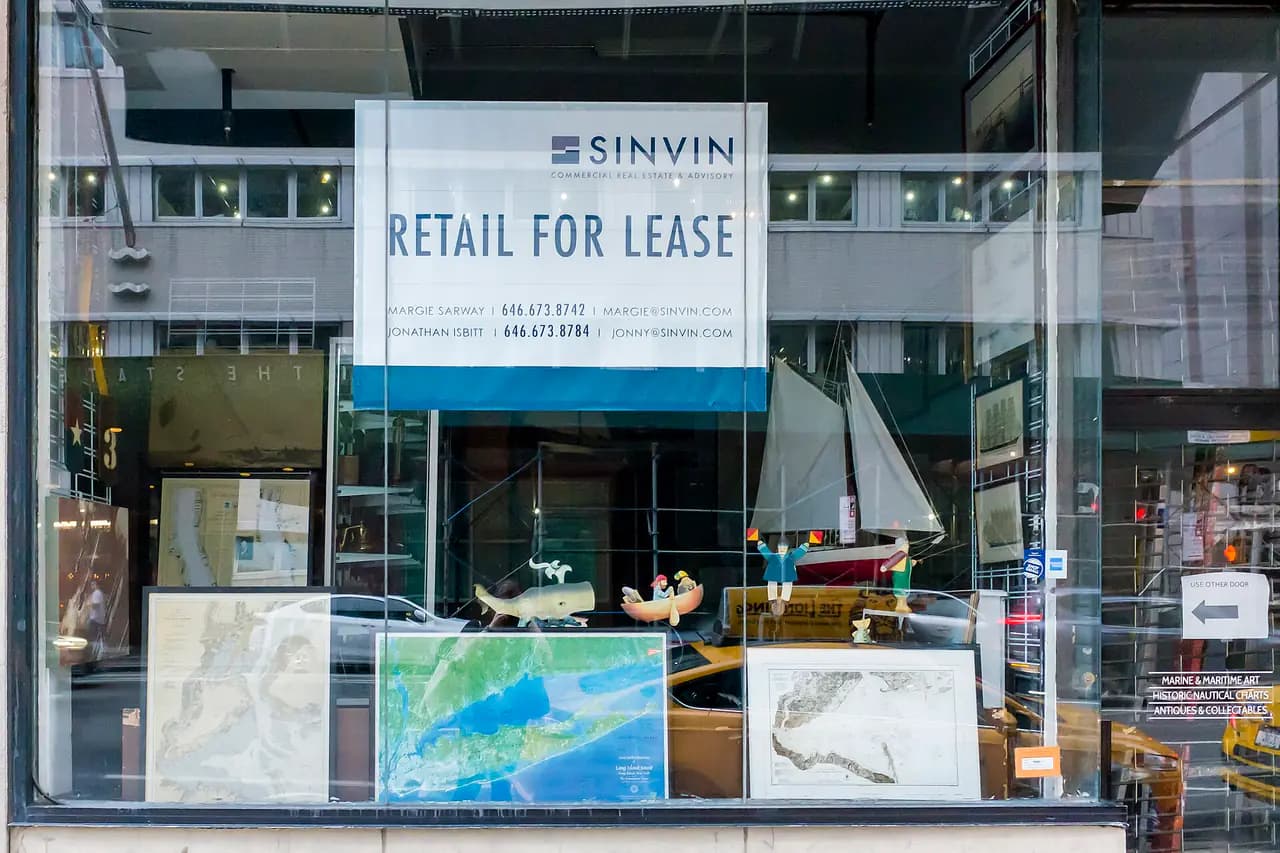
Photo: Billie Grace Ward / Wikimedia Commons · CC BY 2.0
- 16,047 of the city's 141,744 storefronts were vacant at the end of September, an 11.32% rate, the highest in more than two years.
- Small businesses posted a net loss of 205 storefronts from July to September: 1,996 openings and 2,201 closings.
- Manhattan is highest at 13.12% but falling; Brooklyn is at 12.68% and Queens rose to 9.8%, both records for the dashboard.
- FiDi, Tribeca, Ocean Hill, East New York and Old Astoria-Hallets Point are at or near 20% vacant.
- The comptroller's dashboard will update quarterly using Live XYZ street surveys.
About one in nine New York City storefronts was empty at the end of September, according to a new Storefront Vacancy Dashboard City Comptroller Mark Levine's office launched this week. The citywide vacancy rate stood at 11.32%, its highest level in more than two years, with 16,047 of 141,744 street-level storefronts vacant.
The numbers
- Vacancy rate: 11.32% in the third quarter of 2026, up from 11.26% in the second quarter. It is below the 11.66% of September 2023 but still above the pre-pandemic rate of 10.5%, amNewYork reported.
- Openings vs. closings: from July through September, 2,275 storefront businesses opened and 2,551 closed, a net loss of 276. Among small businesses, 1,996 opened and 2,201 closed, a net loss of 205, according to the dashboard.
- Year to date: amNewYork's analysis of the data counted 7,146 small business closures and 6,547 openings in the first nine months of 2026, a net loss of 599, compared with 371 in the same period of 2025.
- Counting chains too, closures have outnumbered openings for 12 straight quarters, the outlet reported. A closing can mean a move rather than a business shutting down.
By borough and neighborhood
- Manhattan: 13.12%, the highest of the five boroughs but down from 15.91% three years ago, and the only borough where vacancies fell last quarter.
- Brooklyn: 12.68%, now less than half a point behind Manhattan.
- Queens: 9.8%, up from 8.27% three years ago, the biggest increase of any borough.
- Bronx and Staten Island: the lowest rates, 8.23% and 8.13%.
- Five neighborhoods are at or near 20% vacant: the Financial District and Tribeca in Manhattan, Ocean Hill and East New York in Brooklyn, and Old Astoria-Hallets Point in Queens.
What's empty
Former restaurants make up the largest number of vacant storefronts whose previous use is known, at 1,799, amNewYork reported, although restaurant spaces have a lower vacancy rate (8.4%) than furniture and home goods (15.8%) or clothing stores (13.5%). Levine's June report, Who's Minding the Storefronts?, found that vacancies cluster: storefronts within 250 feet of an empty one were more likely to be empty themselves.
Holiday season
The data lands just before Black Friday and Small Business Saturday. A Manhattan Chamber of Commerce report released Monday projects that in-store retail and restaurant sales in the borough will be flat to down as much as 1% this November and December after inflation, with steeper declines expected in Harlem, East Harlem, Washington Heights and Inwood, according to amNewYork.
How the data works
The dashboard uses street-level surveys by the company Live XYZ and will be updated quarterly, the comptroller's office says. A storefront counts as vacant only when no business occupies it; spaces that are temporarily closed or "coming soon" count as occupied, so the office warns the rates may be underestimates.


- NYC ComptrollerStorefront Vacancy Dashboard
- amNewYorkEmpty feeling: More than 16,000 NYC storefronts now sit vacant, new comptroller dashboard shows
- NYC ComptrollerWho's Minding the Storefronts? An Analysis of Storefront Vacancies
Every story links to the reporting and records it’s based on. Our editors write each piece from public reporting and official data, and check it against those sources before it’s published.

Comments
0NSynced with CommunityIn CommunityYour comment is also posted to Community with this story attached, so neighbors can find it and reply there too.
No comments yet
Start the conversation — your comment shows up here and in Community for neighbors nearby.