NYC Council votes Thursday on a ban on 'surveillance pricing,' when companies use your data to set your price
Speaker Julie Menin's bill would bar businesses from using algorithms and personal data to charge different people different prices for the same thing. Regular coupons, loyalty rewards and senior or veteran discounts would still be allowed.
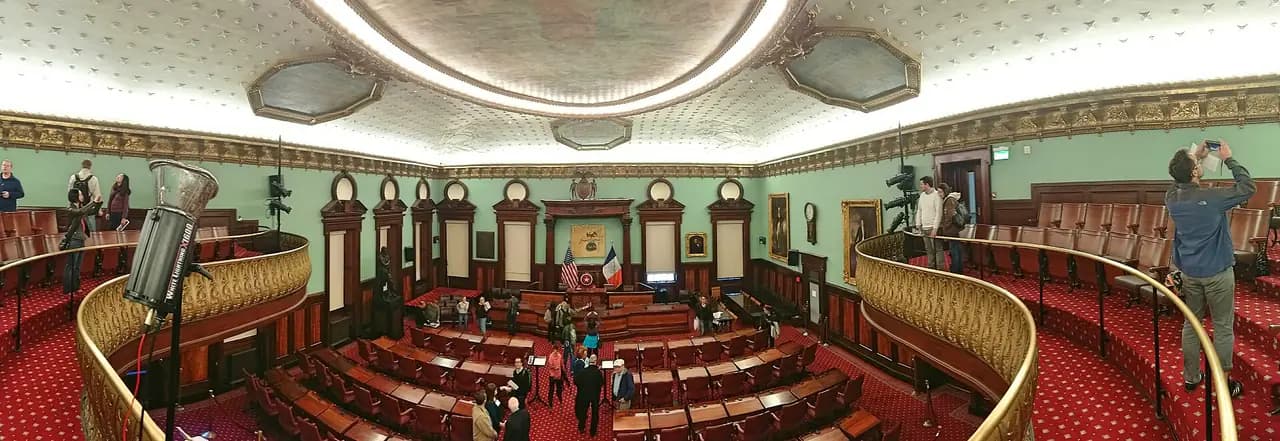
Photo: Lwsmith10128 / Wikimedia Commons · CC BY-SA 4.0
- The City Council is set to vote Thursday, Nov. 12, on Int. 891-A, Speaker Julie Menin's bill banning surveillance pricing: using algorithms and personal data to charge different customers different prices for the same goods or services.
- The Consumer and Worker Protection Committee votes at 11 a.m., ahead of the full Council's Stated Meeting that afternoon. A Council official told amNY the bill has enough votes to pass.
- The Department of Consumer and Worker Protection would enforce it, with civil penalties of up to $1,000 per violation; each affected consumer or transaction could count separately.
- Ordinary promotions, coupons, loyalty rewards and discounts for groups like veterans and seniors would still be allowed. Insurance and credit pricing are exempt.
- If passed and signed, the ban would take effect one year after it becomes law, amNY reported.
Two people can open the same app, look at the same product at the same moment and see different prices. The New York City Council is set to vote Thursday, Nov. 12, on a bill that would ban that practice when it is driven by your personal data, known as surveillance pricing.
The measure, Int. 891-A, is sponsored by Council Speaker Julie Menin and has 19 Council sponsors plus Public Advocate Jumaane Williams, according to the Council's legislative record. A Council official told amNY it is expected to have enough votes to pass. The Consumer and Worker Protection Committee is scheduled to vote at 11 a.m., ahead of the full Council's Stated Meeting in the afternoon.
What the bill would ban
The bill defines surveillance pricing as pricing set completely or partly by an algorithm that uses personal data to offer different prices to different customers for the same goods or services. Under the version described by amNY and the Council's file, businesses could not:
- set or adjust a price for a customer using surveillance pricing, or advertise prices that way;
- collect, use, sell or share personal data to make surveillance pricing possible;
- offer a personalized discount unless it is open on the same terms to anyone who meets the disclosed conditions.
Businesses that offer certain personalized discounts would have to let customers ask what personal data was used to set their price, amNY reported.
What would still be allowed
The ban does not outlaw all variable pricing. Ordinary promotions, coupons, loyalty rewards and discounts for groups such as veterans and seniors could continue, and some discounts based on a customer's purchase history would be allowed with disclosure, according to amNY. Insurance and credit-related pricing are exempt, and the Council's file carves out certain fees set by broker-dealers and investment advisers.
Enforcement and cost
The city's Department of Consumer and Worker Protection (DCWP) would investigate violations and could seek civil penalties of up to $1,000 per violation, with each affected consumer or transaction potentially counting separately. The bill does not let consumers sue on their own, something DCWP Commissioner Sam Levine asked for at a June hearing; a DCWP official told amNY the agency still strongly supports the revised bill. The Council's fiscal estimate puts the cost at about $207,818 in fiscal 2028 and $356,258 a year after that, for four new DCWP staff. Small businesses would be able to appeal, an option the state's version lacks, Quartz reported, citing The New York Times.
If the Council passes the bill and Mayor Zohran Mamdani signs it, the ban would take effect one year after enactment, up from the 120 days in the original draft, amNY said.
How the bill changed
Menin introduced a two-page version in May. At the June 17 hearing, she described a Council investigation that ran about 370 price checks with 10 rideshare accounts on three routes and found some accounts repeatedly got automatic discounts others did not. Retail, hotel and tech groups warned the first draft could kill loyalty programs, and the revised bill now runs 10 pages with detailed rules on rewards programs, online marketplaces and personalized promotions, amNY reported.
Consumer advocates say it does not go far enough. Consumer Reports urged the Council to close what it called a location-data loophole, tighten the purchase-history exemption and drop language it says would make the law hard to enforce. It said New York City would be the fifth jurisdiction to ban the practice, after Maryland, Connecticut, New Jersey and Seattle. NewYorkNews will update this story with the result of Thursday's vote; follow it on our votes tracker.


- amNYSame product, different price? NYC Council wants to stop companies from using your data to set prices
- New York City Council (Legistar)Int 0891-2026: Prohibiting surveillance pricing
- QuartzNew York City Council set to pass surveillance pricing ban
- Consumer Reports AdvocacyConsumer Reports urges New York City Council to strengthen the surveillance pricing ban
Every story links to the reporting and records it’s based on. Our editors write each piece from public reporting and official data, and check it against those sources before it’s published.

Comments
0NSynced with CommunityIn CommunityYour comment is also posted to Community with this story attached, so neighbors can find it and reply there too.
No comments yet
Start the conversation — your comment shows up here and in Community for neighbors nearby.