NYC Kalshi users ages 18 to 20 lost $8.9 million this year, Council probe finds. Prediction-market executives are called to testify Dec. 14
Individual city accounts lost $52.5 million on Kalshi between Jan. 1 and Nov. 1, while accounts classified as institutional gained more than $340 million. The Council is weighing first-in-the-nation limits on how prediction markets advertise.
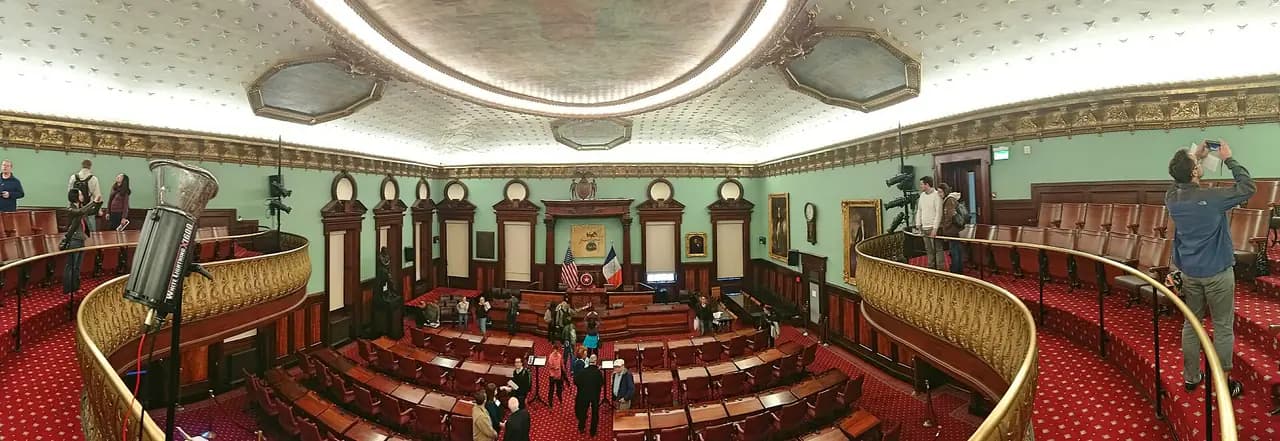
Photo: Lwsmith10128 / Wikimedia Commons · CC BY-SA 4.0
- Kalshi data shows about 484,000 individual accounts with NYC addresses as of Nov. 1. About 51,000, or 10.5%, belong to users ages 18 to 20.
- That age group lost about $8.9 million from Jan. 1 to Nov. 1, about 17% of the $52.5 million in net losses by individual city users.
- Accounts classified as institutional gained more than $340 million in the same period. Kalshi disputes counting every LLC trader as an institution.
- Polymarket acknowledged a program of ads that used a mock trading site with fictitious profits, run by a 19-year-old and four interns.
- Three Council committees will hold a joint hearing on Monday, Dec. 14, on the findings and on proposed marketing rules. Free help: call or text the state HOPEline at 1-877-8-HOPENY.
Young New Yorkers are losing a disproportionate share of money on prediction-market apps, according to preliminary findings from a City Council inquiry. Council leaders want the companies to answer questions in public next month.
Speaker Julie Menin released the findings last week and invited executives from Kalshi, Polymarket, Coinbase, Gemini Titan and Novig to testify at a joint oversight hearing on Monday, Dec. 14, according to the Council's announcement. The committees on Consumer and Worker Protection, Oversight and Investigations, and Mental Health and Substance Use will also take up what the Council calls first-in-the-nation legislation on how these platforms market themselves.
What the Council found
- A big city user base: about 484,000 individual Kalshi accounts had New York City addresses as of Nov. 1, based on data Kalshi gave investigators. About 51,000 belonged to users ages 18 to 20, and another 78,600 to users ages 21 to 24.
- Outsized losses for the youngest users: users ages 18 to 20 lost about $8.9 million from Jan. 1 to Nov. 1. That is about 17% of the $52.5 million lost by individual city users, even though the group holds about 10.5% of accounts and about 4% of daily trading volume.
- Individuals lost, institutions gained: from Jan. 1 to Aug. 11, individual city users lost about $17.6 million while institutional accounts gained more than $210 million. From Aug. 12 to Nov. 1, individuals lost about $34.9 million and institutional accounts gained $130.7 million.
- Polymarket's "buzz" program: the company acknowledged that a user-generated content program that ran from January to June used social media ads showing a mock trading site with fictitious profits. It was managed by a 19-year-old and four interns, and the company could not say who built the mock site, the Council said.
- Gambling-style marketing: in a sample of ads, investigators found sign-up, deposit and first-trade bonuses, plus ads tied to sports viewing, fandom, leagues, teams and broadcasters.
What the companies say
Kalshi disputed the institutional-versus-individual split, arguing that the analysis counted every trader using an LLC as an institution, even though some individuals set up such entities for tax or business reasons, Quartz reported, citing Bloomberg. A Kalshi spokesperson said users under 21 lose an average of $17.40 a month.
Both companies added safeguards this fall. Polymarket announced self-exclusion and deposit limits in late September. Kalshi set a default $2,500 monthly deposit limit for 18- to 20-year-olds in late October, the Council said.
The bigger fight in Albany and the courts
New York's legal minimum age for sports betting is 21. Attorney General Letitia James is suing Polymarket, arguing that it operates unlawfully by letting 18- to 20-year-olds place bets, the Council noted. She also wants Kalshi ruled an unlicensed gambling operation. In court on Nov. 23, Kalshi suggested it could cut off New Yorkers under 21, Quartz reported, citing Bloomberg.
Kalshi has also been courting the city in other ways. Earlier this month it pledged $1 million to the NYCHA Health Corps (our earlier story).
If betting or trading is becoming a problem
New York's free, confidential HOPEline for gambling and substance use is open 24/7: call 1-877-8-HOPENY or text HOPENY (467369), according to the state Office of Addiction Services and Supports. Help is available in English, Spanish and several other languages.


- New York City CouncilSpeaker Julie Menin Announces Preliminary Findings of Council Inquiry Into Prediction Market Platforms' Marketing Practices
- QuartzKalshi users under 21 lost $8.9 million in New York City in 10 months, a council probe finds
- New York PostNYC Kalshi users lost over $52M in 2026: City Council
- NYS Office of Addiction Services and SupportsHOPEline
Every story links to the reporting and records it’s based on. Our editors write each piece from public reporting and official data, and check it against those sources before it’s published.


Comments
0NSynced with CommunityIn CommunityYour comment is also posted to Community with this story attached, so neighbors can find it and reply there too.
No comments yet
Start the conversation — your comment shows up here and in Community for neighbors nearby.