Hochul opts New York into federal school-choice tax credit, over teachers unions' objections
The governor says the credit can help public school students too. The teachers unions and the Legislature's Democratic leaders wanted her to stay out.
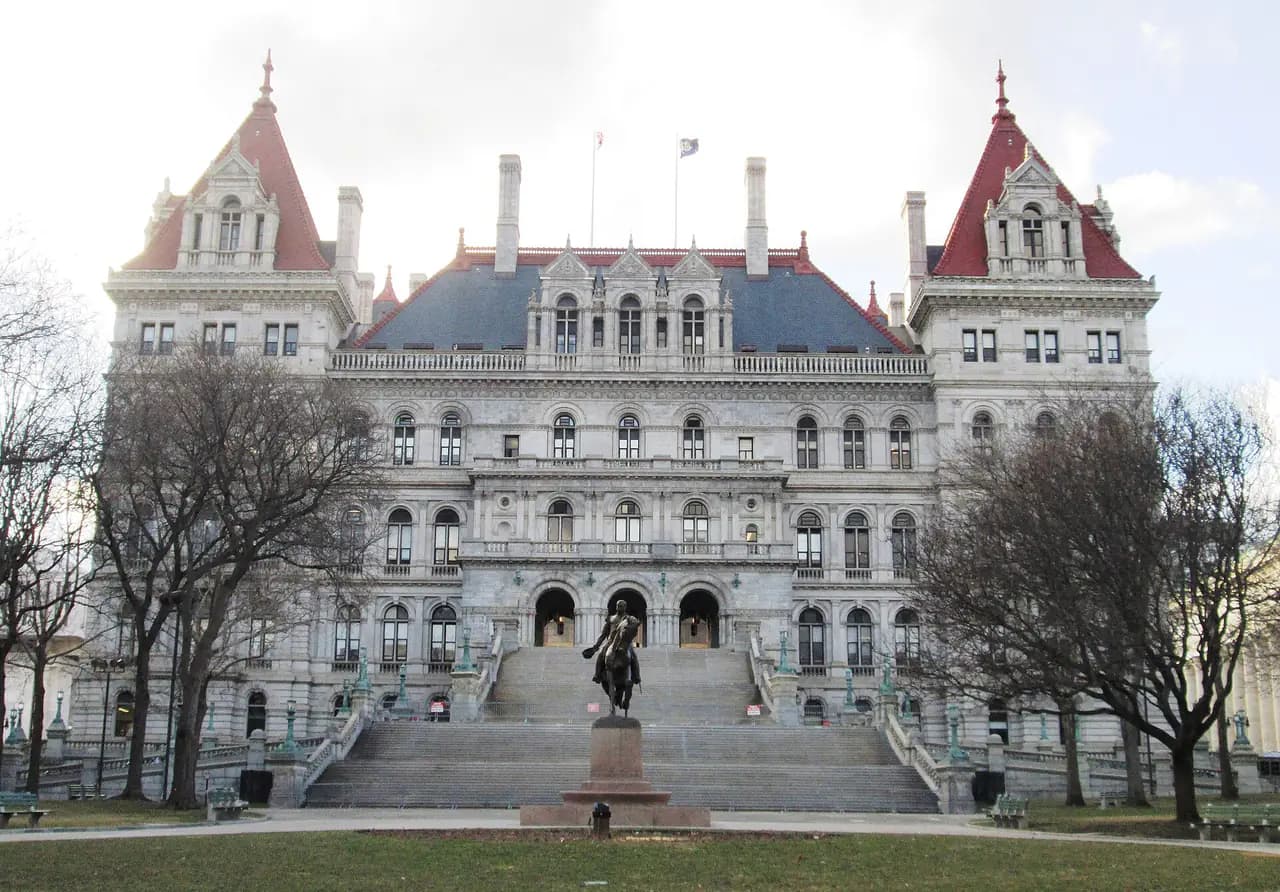
Photo: Beyond My Ken / Wikimedia Commons · CC BY-SA 4.0
- Gov. Kathy Hochul said Friday that New York will take part in the federal scholarship tax credit created by last year's One Big Beautiful Bill Act.
- Taxpayers who donate to scholarship-granting organizations can get a credit of up to $1,700, or $3,400 for married couples filing jointly, Gothamist reported. The credit starts in January.
- Scholarships can pay for private or religious school or for services like tutoring and after-school programs. Families earning up to 300% of the area median income qualify.
- Hochul said she joined only after concluding that public school students can benefit, without costing state or local budgets anything.
- UFT president Michael Mulgrew called it "a failure of leadership." Assembly Speaker Carl Heastie and Senate Majority Leader Andrea Stewart-Cousins had urged her to opt out.
Gov. Kathy Hochul said Friday that New York will opt in to the Trump administration's new federal scholarship tax credit, a program teachers unions have fought because they say it will pull families and money away from public schools.
The credit was created by the federal tax and spending package Congress passed last year, known as the One Big Beautiful Bill Act. States have to choose to take part. Hochul's decision means New Yorkers who donate to "scholarship granting organizations" can claim a credit of up to $1,700, or up to $3,400 for married couples filing jointly, Gothamist reported. It takes effect in January.
What the money can pay for
Those organizations can give scholarships for private or religious school tuition, or for educational services such as tutoring and after-school programs. Families earning up to 300% of their area's median income are eligible, according to Gothamist. Similar programs elsewhere have mostly supported private schools, but the governor's office says New York's version will help students in public and private schools.
Hochul: "money on the table"
In a written statement, Hochul said she had been clear that New York would join "if, and only if" all schools and students, including public school students, could benefit. After reviewing the federal regulations, she said, the state believes the program can bring millions of dollars to New York students and families "without taking a single dollar from public schools or our state or local budgets."
"I'm not going to leave money on the table when it could help our kids," she said. Hochul added that business leaders have committed to using the program to support public school students, and she pointed to more than $10 billion in added school funding during her tenure, including fully funding Foundation Aid.
Hochul first said she was interested in opting in last spring, during a meeting with Agudath Israel of America, a group that supports religious education, Gothamist reported. She made the final decision after the federal government released rules on how the program will work.
Who is for it and who is against it
The move puts Hochul at odds with the unions and legislative leaders backing her reelection. Michael Mulgrew, president of the United Federation of Teachers, called it "a failure of leadership." In recent days, Assembly Speaker Carl Heastie and Senate Majority Leader Andrea Stewart-Cousins both said the state should stay out. Heastie said New York should keep investing in the public schools that educate most of its children.
The NAACP also opposed the credit, warning it could speed the departure of wealthier families from public schools and deepen segregation. American Federation of Teachers president Randi Weingarten had lobbied governors nationwide to reject it.
New York's Catholic bishops, including Archbishop Ronald Hicks, praised the decision on Friday, saying it will help families choose the best school for their children "at no additional cost to the state," Gothamist reported.
- Office of Gov. Kathy HochulStatement from Governor Kathy Hochul (Oct. 9, 2026)
- GothamistNY will opt in Trump's school choice program, Hochul says
Every story links to the reporting and records it’s based on. Our editors write each piece from public reporting and official data, and check it against those sources before it’s published.
Comments
0NSynced with CommunityIn CommunityYour comment is also posted to Community with this story attached, so neighbors can find it and reply there too.
No comments yet
Start the conversation — your comment shows up here and in Community for neighbors nearby.