City Council passes Romanch's Law 40-7, ending Central Park horse carriages by June 2028; union vows to sue
The veto-proof vote sends the ban to Mayor Mamdani, who backs it. The city must deliver a worker transition plan by April 1, 2027; TWU Local 100 says it will challenge the law in court.
Updated Oct. 22: the Council passed Romanch's Law 40-7; it goes to Mayor Mamdani. TWU Local 100 says it will sue.
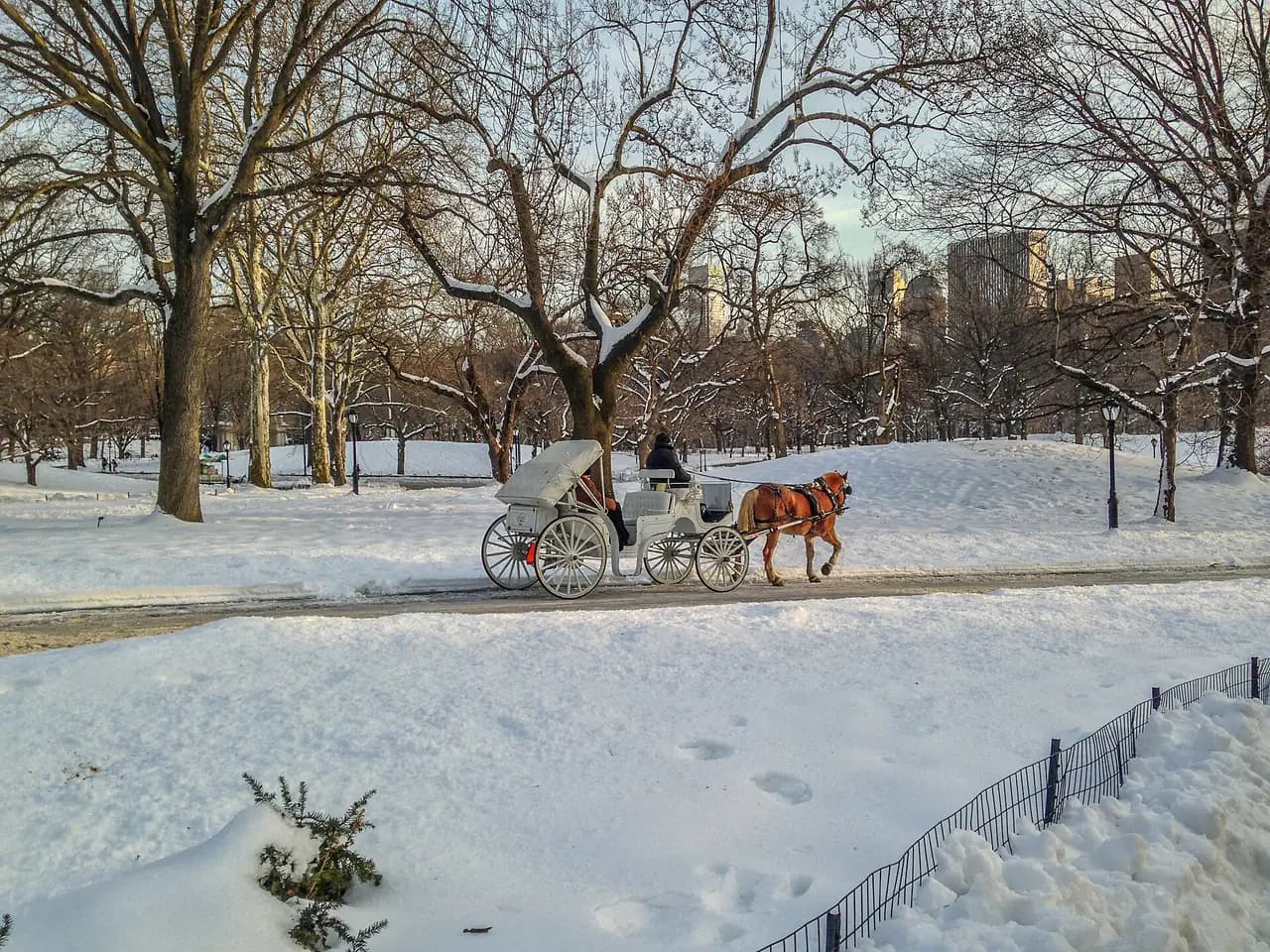
Photo: raduranga / Wikimedia Commons · CC BY-SA 4.0
- The City Council passed Romanch's Law (Intro. 943-A) 40-7 with two abstentions on Thursday, a veto-proof majority; it now goes to Mayor Zohran Mamdani, who supports it (City Council, amNewYork).
- No carriage, horse or driver licenses can be issued on or after June 1, 2028; licenses active now expire for good on May 31, 2028.
- A mayor-designated agency must produce an industry transition plan by April 1, 2027, including a workforce program and consideration of compensation for owners' businesses, licenses and equipment.
- By June 1, 2027, horse owners must certify to the Health Department that no horse will be sold for slaughter or to another carriage business.
- TWU Local 100 said 'we will see them in court'; its lawyers argue the ban takes property without just compensation (amNewYork, CBS New York).
Related clip
Update, Oct. 22: Council passes the ban, 40-7
The City Council on Thursday passed Romanch's Law, Intro. 943-A, by a vote of 40 to 7 with two abstentions, a veto-proof majority, amNewYork reported. The Council said the law phases out horse-drawn carriages in Central Park by June 1, 2028. The bill now goes to Mayor Zohran Mamdani, who supports the ban; he can sign it, veto it, or let it take effect after 30 days, amNY noted. Members of Romanch Mahajan's family were present for the vote.
- The deadline: no licenses for carriage horses, horse-drawn cabs or drivers can be issued on or after June 1, 2028, and licenses active when the law takes effect expire for good on May 31, 2028, according to the Council's summary.
- Workers: an agency named by the mayor must deliver a transition plan by April 1, 2027, for owners, drivers and stable workers. It must include a workforce program with job referrals, career counseling and hiring fairs, and must consider compensating owners for the value of their businesses, licenses and equipment. Menin is forming a joint working group with one representative each from her office, the administration and labor.
- Horses: by June 1, 2027, every owner of a licensed horse must certify to the Health Department that no horse will be sold or transferred for slaughter or for use in another carriage business. Owners may keep their horses.
- A failed delay: Queens Council Member James Gennaro moved to push the effective date to 2030 to give workers more time; six members, mostly Republicans, backed the motion and it was rejected, amNY reported.
"The tragic and preventable death of 18-year-old Romanch Mahajan this summer underscored the need for urgent action after decades of mounting concerns," Speaker Julie Menin said in a statement. Sponsor Christopher Marte said the law gives workers time and help to move to new jobs.
The union's next move
"We will see them in court," TWU Local 100 Administrative Vice President Alexander Kemp said after the vote, calling the bill "blatantly unconstitutional," according to amNY. Union lawyers Arthur Schwartz and former Council Member Ben Kallos argue the ban takes carriage owners' property, including medallions they paid tens of thousands of dollars or more for, without just compensation. Kallos told CBS New York the union is prepared to challenge the ban in federal court and argued the bill's economic impact analysis was left blank. Owner Francesco Riccobono told CBS he had invested $400,000 two years ago to expand his father's business.
The Central Park Conservancy, PETA, the ASPCA and the Animal Legal Defense Fund praised the vote, amNY and CBS reported.
Earlier: drivers rally before the vote (Oct. 16)
Carriage horse drivers and medallion owners rallied at a Central Park entrance to oppose Romanch's Law ahead of the Council vote, amNewYork and NY1 reported.
Standing at the West 57th Street and Seventh Avenue entrance, drivers called on Mayor Zohran Mamdani and Council Speaker Julie Menin to rewrite the phase-out, NY1 reported. Christina Hansen, TWU Local 100's shop steward for the carriage industry, told both outlets the bill still fails to protect workers, horses or medallion owners.
"This is not a plan. It's a concept of a plan," Hansen said, according to NY1, arguing that any April job-transition outline would lack funding and a firm legislative mandate. Driver and medallion owner Atakan Aktay told NY1 he invested his life savings in a medallion and is "not against change" but against "being left behind." Ahmet Bilici, a driver for 23 years, told amNewYork the mayor and speaker were taking his business without guaranteed compensation.
Alexander Kemp, Local 100's executive vice president, told amNewYork the workforce transition language offers referrals and career fairs but "no protection for the workers" in the form of guaranteed jobs. Hansen said workers are weighing a lawsuit if the Council passes the bill, but that no suit comes until the city acts.
What the bill says — and Menin's reply
Before the vote, Romanch's Law was, named for 18-year-old Romanch Mahajan, who died in June after being thrown from a runaway carriage; amNewYork said the measure has about 30 co-sponsors of 51 members and would ban park carriages, end new licenses and require a workforce transition program, while saying the city must "consider" compensating owners for businesses, licenses and equipment. NY1 said the deal also calls for a full job-transition plan by April.
Menin spokesperson Jack Lobel told both outlets the speaker has been clear that the transition needs "meaningful protections" for workers and that Local 100 was part of talks that shaped the bill. Lobel said Menin's office invited TWU and the administration into a new joint working group as the plan is implemented. NY1 said it had also sought comment from the mayor's office.
Earlier deal
Earlier this week, Menin and Mamdani agreed to advance the ban, with a June 1, 2028, phase-out date described in prior Council materials. TWU International President John Samuelsen had already called the worker language full of "supposals" without guarantees. The Friday rally sharpened that critique six days before the vote.


- New York City CouncilSpeaker Julie Menin and the New York City Council Pass Historic Romanch's Law to Phase Out Horse Drawn Carriage Industry
- amNewYorkCity Council approves bill to ban 168-year-old horse carriage industry in Central Park
- CBS New YorkNYC Council passes bill to ban horse carriage rides within 2 years
- amNewYorkTransport Workers Union, carriage horse workers rail against Menin and Mamdani deal to end industry
- NY1Horse carriage drivers rally against ban ahead of vote to end industry
- GothamistNYC Council, Mayor Mamdani agree to end Central Park's carriage horse industry
- ABC7 New YorkDeal reached to end horse carriage industry, New York City official says
Every story links to the reporting and records it’s based on. Our editors write each piece from public reporting and official data, and check it against those sources before it’s published.

Comments
0NSynced with CommunityIn CommunityYour comment is also posted to Community with this story attached, so neighbors can find it and reply there too.
No comments yet
Start the conversation — your comment shows up here and in Community for neighbors nearby.