Brooklyn Heights neighbors call Mamdani's $4 billion BQE repair plan a '40-year Band-Aid'
At a public scoping session on the city's plan to rehabilitate the crumbling 1.5-mile BQE Central, residents objected to temporary bypass roads beside the Promenade, lost playground space and the lack of alternatives.
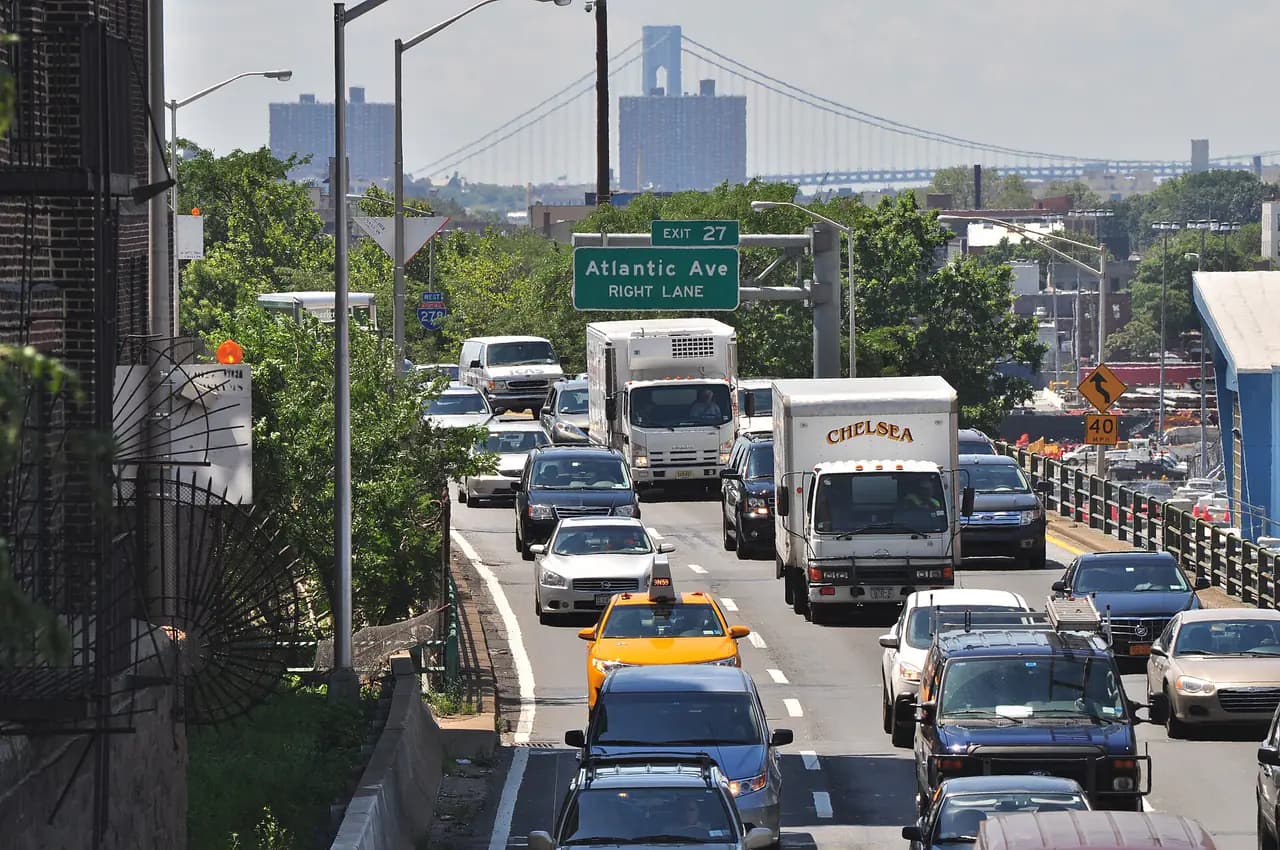
Photo: Joe Mabel / Wikimedia Commons · CC BY-SA 3.0
- NYC DOT proposes to rehabilitate BQE Central, the 1.5-mile stretch between Atlantic Avenue and Sands Street that includes the triple cantilever under the Brooklyn Heights Promenade, extending its life by about 40 years.
- The city estimates the cost at $3.5 billion to $4 billion and has $1.6 billion in the capital plan so far; construction would start in 2029 and finish by 2040, according to DOT.
- To keep traffic off local streets, DOT would build two temporary bypass structures: a double-deck bypass over Furman Street and a Queens-bound bypass from Columbia Heights toward the Manhattan Bridge.
- At last week's scoping session, residents called the plan a '$4 billion Band-Aid' and objected to impacts on Harry Chapin Playground, Squibb Park and a Furman Street condo, Brooklyn Paper reported.
- DOT's project page lists a Nov. 23 deadline for written comments; Brooklyn Paper reports the period has been extended to Jan. 11, 2027. A draft environmental impact statement is due in 2027.
The Mamdani administration's plan to keep the aging Brooklyn-Queens Expressway standing through Brooklyn Heights ran into a wall of criticism at a public scoping session last week, where speakers described the roughly $4 billion repair as a costly stopgap that repeats the mistakes of Robert Moses, Brooklyn Paper reported.
The meeting is part of the city's environmental review. It is meant to collect comments on what the review should study, not to vote on the project, but the feedback reported from the room was entirely negative.
What the city is proposing
- The stretch: "BQE Central," about 1.5 miles between Atlantic Avenue and Sands Street. The city owns this section, which has 21 bridges and structures, including the triple cantilever that stacks two levels of highway under the Brooklyn Heights Promenade, with Furman Street below, according to NYC DOT.
- The work: repair and strengthen the existing structure rather than replace it, fixing deteriorated parts, drainage, lighting and railings. The highway would stay two lanes in each direction and interchanges would not change. DOT says the rehab would add about 40 years of life.
- The bypasses: to avoid pushing traffic onto local streets, DOT would build temporary roads next to the highway: a double-deck bypass over Furman Street from Atlantic Avenue to Columbia Heights, no higher than the Queens-bound level, and a Queens-bound bypass from Columbia Heights to just before the Manhattan Bridge, passing over the approach to the Brooklyn Bridge. Both would be torn down afterward.
- Cost and timing: $3.5 billion to $4 billion, with $1.6 billion currently in the capital plan. Construction is expected to start in 2029 and finish by 2040, including building and removing the bypasses, per DOT.
- Traffic: about 130,000 vehicles a day use BQE Central, including 13,000 trucks.
DOT says deterioration of the cantilever deck has gone beyond what short-term fixes, such as fewer lanes and the ban on overweight trucks, can manage. "The can has been kicked down the road for too long," the agency's project page says.
What residents objected to
- No alternatives: the draft scope of work compares the plan only with leaving the highway as is. Speakers asked the city to explain which long-term options it considered and why they were dropped.
- Parks and playgrounds: construction would affect Squibb Park, Hillside Dog Park and parts of the Promenade. Harry Chapin Playground, which sits on the Columbia Heights overpass, would be removed and later rebuilt, according to Brooklyn Paper.
- Neighbors on Furman Street: a condo board representative at 360 Furman St. said the bypass would pass within about four feet of the building and raised concerns about noise, air quality and structural damage. "A decade is not temporary for the people who live next to it," she said.
- The bigger picture: the Brooklyn Heights Association asked that the review state the city's stated goal of eventually reducing reliance on highways in the corridor. The Atlantic Avenue BID asked for fixes to dangerous interchanges, which the city has avoided touching in part because that could trigger federal review, the paper said.
The previous administration's proposals to rebuild the triple cantilever with new green space stalled, in part after a federal funding bid was rejected, Brooklyn Paper noted.
How to comment
Comments can go to DOT through the online form at nyc.gov/bqe (512-character limit), by email to BQECentral@dot.nyc.gov, or by mail to NYC DOT, Division of Bridges, BQE Central Project Team, 55 Water Street, 5th Floor, New York, NY 10041. DOT's project page still lists a Nov. 23 deadline; Brooklyn Paper reports the comment period was extended to Jan. 11, 2027. If you plan to weigh in, sending comments before Nov. 23 avoids any doubt.
After the comment period, DOT will publish a final scope. A draft environmental impact statement, with new public hearings, is expected in 2027.


- Brooklyn Paper'$4 billion, 40-year Band-Aid': Brooklynites slam Mamdani's plan for BQE
- NYC DOTBQE Central Project
- NYC DOTBQE Central Project Draft Scope of Work for a Draft Environmental Impact Statement (CEQR No. 26DOT006K)
Every story links to the reporting and records it’s based on. Our editors write each piece from public reporting and official data, and check it against those sources before it’s published.
Comments
0NSynced with CommunityIn CommunityYour comment is also posted to Community with this story attached, so neighbors can find it and reply there too.
No comments yet
Start the conversation — your comment shows up here and in Community for neighbors nearby.